
Choosing between an acrylic transparent magnetic board and a traditional whiteboard for your teaching environment is not a matter of finding a universally superior tool. Instead, the ideal choice depends on your specific teaching style, classroom layout, and how you intend to engage your students. While both boards serve as visual aids, they facilitate learning in fundamentally different ways.
Arylic transparent magnetic boards represent a modern shift in educational furniture, excelling in interactive, layered, and dual-sided teaching environments. They are particularly valuable for collaborative group work, allowing teachers to overlay diagrams or facilitate multi-directional student interaction. Their clear aesthetic blends seamlessly into modern classroom designs, making spaces feel larger and more open.
Conversely, traditional whiteboards remain the industry standard for high-contrast, front-facing lectures and heavy daily use. They provide a reliable, high-visibility canvas that is easily readable from the back of a large room. Furthermore, their solid steel construction ensures robust magnetic holding power, making them the superior choice for educators who rely heavily on physical magnetic teaching aids.
Products mentioned in this guide
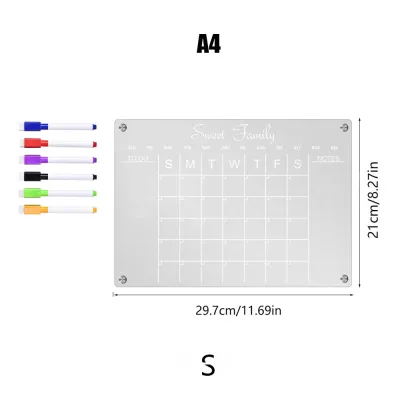
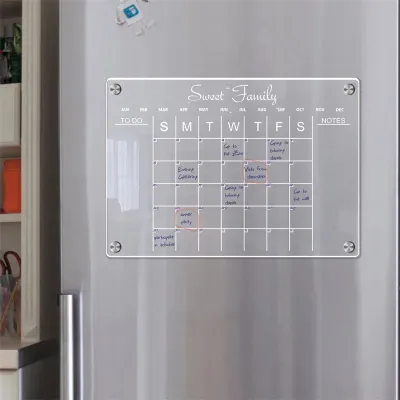
![🇸🇬 [In Stock]Magnetic Board Clear Acrylic Calendar Board Fridge Magnet Dry Erase Board Planner Daily Weekly Monthly Schedule](https://img.lazcdn.com/g/p/9825d932826324a771fc1554bdd6e9ec.jpg_400x400q80.jpg_.webp)
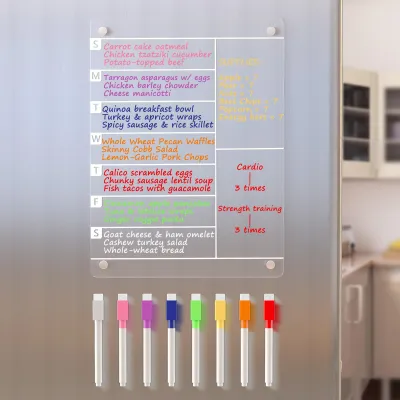
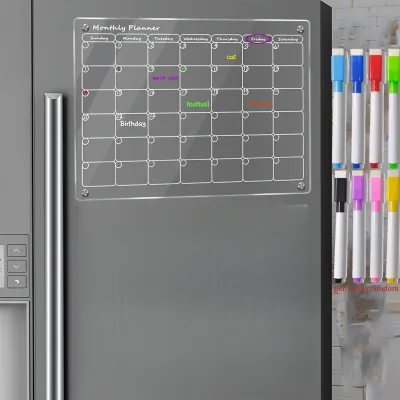
Prices are valid at publication and may change. Please refer to the product page for the latest price.
To make an informed decision for your classroom, you must evaluate several critical factors. These include visual clarity and glare, the strength of magnetic accessories, long-term durability and cleaning requirements, and physical installation constraints. Understanding how these elements perform in a daily school environment will help you select the board that best supports your pedagogical goals.
Visibility and Teaching Interaction
The visual performance of a writing board directly impacts student engagement and comprehension. Traditional whiteboards feature a solid, matte, or semi-gloss white surface designed specifically for high-contrast viewing. When you write on a traditional whiteboard with dark dry-erase markers, the high contrast ratio ensures that text and diagrams are easily readable, even for students seated at the back of a deep classroom. The matte finish of high-quality whiteboards also scatters light in multiple directions, which minimizes distracting reflections from overhead classroom lights.
Acrylic transparent magnetic boards introduce a completely different visual dynamic. Because they are clear, they allow you to implement unique pedagogical techniques. For example, you can mount a transparent board over a physical map, a historical timeline, or a complex grid system, allowing you to trace routes or highlight specific data points directly over the underlying material without damaging it. In collaborative settings, a transparent board mounted on a rolling stand allows you to stand behind the board and write while maintaining direct, face-to-face eye contact with your students.
However, this transparency comes with significant optical trade-offs. Acrylic possesses a highly polished, glossy surface that is prone to specular reflection, commonly known as glare. In classrooms with bright overhead LED panels, fluorescent tubes, or large windows that let in natural light, the board can act like a partial mirror. This glare can obscure your writing and cause eye strain for students sitting at certain angles. Additionally, because the board is clear, the readability of your writing depends entirely on the background behind it. If the wall behind the board is cluttered, brightly colored, or darkly painted, the contrast of standard dry-erase markers drops significantly, making the text difficult to decipher.
To ensure adequate visibility before purchasing a transparent board, you must carefully evaluate your classroom’s physical environment. Observe the wall where you plan to install the board at different times of the day to see how natural and artificial light hits the surface. If the wall is dark or highly textured, you may need to install a light-colored backing sheet behind the acrylic board to restore contrast. Alternatively, you can position the board away from direct light sources or use specialized matte-finish acrylic boards, though these may slightly reduce the absolute clarity of the transparency.
Magnetic Strength and Educational Accessories
The ability to use magnetic accessories is a cornerstone of primary and secondary education. Traditional whiteboards are constructed with a solid steel sheet backing beneath the writing surface. This steel backing provides a strong, uniform magnetic field across the entire board. When you place magnetic letters, numbers, heavy laminated charts, or magnetic pocket charts on a traditional whiteboard, they cling securely to the surface. The direct contact between the accessory’s magnet and the steel backing maximizes the holding force, preventing heavy teaching aids from sliding down the board during a lesson.

Acrylic transparent magnetic boards handle magnetic accessories differently due to the physical properties of acrylic. Acrylic itself is a non-magnetic polymer. To give these boards magnetic capabilities, manufacturers must laminate a thin, clear metallic sheet or embed a specialized magnetic backing behind the acrylic layer. Because the magnetic force must travel through the thickness of the acrylic sheet—which typically ranges from 3mm to 6mm—the magnetic pull is inherently weaker than that of a solid steel whiteboard. This phenomenon is governed by the physics of magnetic flux, which decreases rapidly as the distance between the magnet and the metal backing increases.
As a result of this reduced magnetic strength, standard low-cost ferrite magnets commonly found on school accessories may not hold securely on an acrylic board. Lightweight magnetic letters or thin paper sheets might stay in place, but heavier cardstock diagrams, thick laminated posters, or magnetic trays are highly likely to slip or fall off. To achieve a reliable hold on an acrylic transparent board, you will often need to upgrade your teaching accessories to use high-strength neodymium (rare-earth) magnets.
Before committing to a bulk purchase of transparent boards for your school, it is highly recommended to perform a physical verification step. Check the manufacturer’s technical specifications for the rated magnetic load capacity of the board. If possible, obtain a small sample of the board and test it directly with the specific magnetic letters, numbers, and organizers you use in your daily lessons. This trial will help you determine whether your existing educational tools are compatible with the board’s magnetic strength or if you will need to budget for specialized high-strength magnetic accessories.
Durability, Staining, and Daily Maintenance
The longevity of a classroom board depends heavily on its material composition and how well it resists the wear and tear of daily school activities. Traditional whiteboards are available in several surface materials, each with distinct durability profiles. Porcelain-on-steel (or vitreous enamel) whiteboards are the gold standard for durability. Fired at extremely high temperatures, the porcelain surface is incredibly hard, non-porous, and highly resistant to scratches, dents, and chemical damage. Even after years of heavy daily use, porcelain boards resist ghosting—the faint, permanent outlines of old marker ink—and can be cleaned easily with standard dry erasers. Cheaper melamine whiteboards, however, are made of plastic-coated fiberboard; they degrade relatively quickly, absorbing marker pigments into their wearing pores and requiring frequent chemical cleaning.
Acrylic transparent magnetic boards are made of polymethyl methacrylate (PMMA), a lightweight and shatter-resistant polymer. While acrylic is highly durable against impacts and will not shatter like glass, it is a relatively soft material compared to porcelain or glass. This makes acrylic highly susceptible to micro-scratches. Daily cleaning with standard felt classroom erasers—which often trap hard dust particles, grit, or dried ink debris—can abrade the acrylic surface over time. These microscopic scratches act as tiny channels that trap marker pigments, leading to permanent staining, cloudiness, and severe ghosting that ruins the board’s transparent aesthetic.
Furthermore, the chemical behavior of dry-erase ink on acrylic requires careful management. Dry-erase markers consist of color pigments, a solvent (usually alcohol), and a release agent (typically a silicone polymer). When you write on a non-porous surface, the solvent evaporates, leaving behind a dry film of pigment and release agent that easily wipes away. On acrylic, some marker formulations can react slightly with the polymer surface if left on for extended periods, making the ink harder to erase.
To preserve the optical clarity and performance of an acrylic transparent magnetic board, you must implement strict, non-abrasive maintenance practices:
- Dust the surface first: Before wiping the board, gently blow or wipe away loose dust and grit with a dry, clean microfiber cloth to prevent scratching.
- Use appropriate cloths: Only use high-density, clean microfiber cloths for erasing. Never use paper towels, tissues, or standard felt erasers, as their fibers can be abrasive to acrylic.
- Apply mild cleaners: Clean the board regularly with a mild, non-abrasive cleaner formulated specifically for acrylic or PMMA. Alternatively, use a highly diluted solution of mild dish soap and warm water.
- Avoid harsh chemicals: Never use isopropyl alcohol, acetone, window cleaners containing ammonia, or abrasive scrubbing powders. These harsh solvents can cause chemical "crazing"—a network of fine, permanent cracks—or permanently cloud the clear plastic.
- Check the care label: Always refer to the manufacturer's care instructions and product label before applying any new cleaning solution to ensure compatibility with your specific board.
Installation, Weight, and Classroom Flexibility
Planning the physical setup of your classroom requires a careful assessment of the board’s weight, mounting hardware, and structural requirements. Traditional whiteboards, particularly large porcelain-on-steel models, are heavy and rigid. A standard 1.2m by 2.4m steel-backed board can weigh upwards of 20 kilograms. Installing such a board requires secure anchoring into structural wall studs or solid concrete walls, which are common in many Singapore school buildings. Once mounted, these boards are permanent, stationary fixtures that define the front of the classroom, offering little flexibility if you want to rearrange the room for different activities.
Acrylic transparent magnetic boards are generally lighter than steel-backed whiteboards of equivalent size, but they still possess substantial weight when manufactured at a thickness (usually 6mm) that prevents bowing. Acrylic boards are typically mounted using metallic standoff pegs. These standoffs support the board at its corners and edges, creating a small gap (usually 15mm to 25mm) between the wall and the back of the board. This gap is essential for the board’s floating aesthetic and allows you to slide physical papers or templates behind the clear surface. However, mounting with standoffs requires drilling precise holes into the wall. If the wall is uneven or the standoffs are misaligned, tightening the mounting screws can place localized mechanical stress on the acrylic, leading to bowing or hairline cracks around the mounting holes over time.
In terms of classroom layout and flexibility, acrylic boards offer unique advantages. Because they are visually lightweight and clear, they do not dominate a room the way a massive white board does. Many schools utilize smaller acrylic boards mounted on rolling metal frames. These mobile units can be easily moved around the classroom to create collaborative zones, act as temporary room dividers, or serve as dual-sided brainstorming stations where two groups of students can work on opposite sides of the same board simultaneously.
Safety is paramount when installing any heavy classroom fixture. Before mounting either type of board, you must verify the wall substrate—whether it is lightweight gypsum drywall, hollow brick, or solid reinforced concrete. Drywall installations require specialized toggle bolts or heavy-duty hollow-wall anchors, whereas concrete walls require masonry drills and expansion plugs. If you are uncertain of the wall’s load-bearing capacity or the appropriate hardware to use, always consult a qualified school facilities manager or a professional installer to ensure the board is securely and safely mounted.
Decision Framework: Choosing the Right Board for Your Classroom
Selecting the right writing surface requires balancing your instructional methods with the physical realities of your classroom. Neither option is a one-size-fits-all solution, but analyzing your daily teaching routines will point you toward the most effective tool.
Choose an Acrylic Transparent Magnetic Board if:
- You prioritize collaborative learning: Your teaching style relies heavily on small-group work, student-led brainstorming, and interactive, multi-directional discussions.
- You use layered visual aids: You frequently teach subjects like geography, anatomy, or engineering where overlaying diagrams on top of maps, charts, or projected screens is highly beneficial.
- You need layout flexibility: You want mobile, dual-sided boards on rolling stands that can be rearranged to support different classroom configurations throughout the day.
- Your classroom has controlled lighting: The room is equipped with dimmable lights, blinds, or anti-glare fixtures that minimize the risk of distracting reflections on a glossy surface.
Choose a Traditional Whiteboard if:
- You deliver front-facing lectures: Your primary teaching method involves standing at the front of the room, writing detailed notes, and presenting to a large group of students who must read the board from a distance.
- You rely on heavy magnetic accessories: Your curriculum involves extensive use of large magnetic letters, heavy cardstock charts, or magnetic organizers that require a strong, steel-backed hold.
- You require a low-maintenance setup: You need a highly durable, scratch-resistant writing surface that can withstand heavy daily use by multiple teachers without requiring specialized cleaning protocols.
- Your classroom has high ambient light: The teaching space has bright, uncontrolled overhead lighting or large windows that would create severe glare on a transparent surface.
Before finalizing your purchase, always perform three essential verification checks. First, assess the ambient light angles in your classroom during peak teaching hours to identify potential glare zones. Second, verify that the weight of the chosen board matches the structural capacity of your classroom walls and that you have the correct mounting hardware. Finally, test your existing magnetic accessories on a sample of the board material to ensure they provide sufficient holding power for your daily lessons.
Frequently Asked Questions (FAQ)
Do acrylic transparent boards require special markers?
Standard dry-erase markers are generally compatible with acrylic transparent magnetic boards, but the performance and erasability can vary based on the ink formulation. Some dry-erase inks dry more slowly on non-porous acrylic, which can lead to smudging if you attempt to erase them too quickly. Additionally, certain marker brands contain harsh solvents that can gradually degrade or cloud the clear acrylic surface over time.
To maintain the optical clarity of your board, many manufacturers recommend using low-odor dry-erase markers or markers specifically labeled as safe for acrylic surfaces. You should avoid using wet-erase markers unless the manufacturer explicitly states they are compatible, as the moisture-activated ink can sometimes leave permanent shadows or ghosting on the polymer. Under no circumstances should you use permanent markers, grease pencils, or abrasive scrubbing pads on an acrylic board. Always refer to the product label or the manufacturer’s care instructions to verify compatible ink types and recommended cleaning solutions before writing on your new board.
Community discussion
Share your experience or ask a question. Comments are reviewed before publication.