
Selecting the right acrylic paint brush shape is the foundation of successful painting, as each profile is engineered to hold, distribute, and texture paint in distinct ways. Unlike other mediums, acrylic paint is highly versatile, fast-drying, and heavy-bodied, meaning the physical structure of your brush directly dictates the texture and precision of your strokes. By matching the brush shape—whether it is a versatile round, a sharp flat, a soft filbert, or a specialized fan—to your intended technique, you can achieve clean lines, seamless blends, and rich textures with ease.
Understanding how these shapes interact with canvas, paper, or wood allows you to work efficiently before the paint dries. This guide breaks down the primary acrylic paint brush shapes, their specific functions, and the practical techniques required to master each stroke.
Choosing Synthetic Bristles to Protect Your Brushes
Before exploring specific shapes, you must select the correct bristle material for acrylic mediums. Acrylic paint consists of pigment suspended in an acrylic polymer emulsion, which is essentially a liquid plastic. This chemical composition is highly alkaline and dries rapidly, making it incredibly harsh on natural hair brushes, such as sable or hog bristle. Natural fibers absorb water and swell, which causes the paint polymers to cling to the organic shafts, leading to rapid degradation, clumping, and splitting of the brush head.
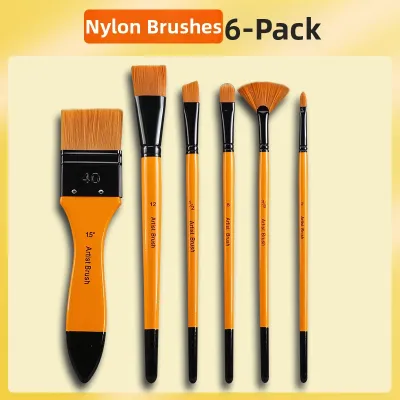
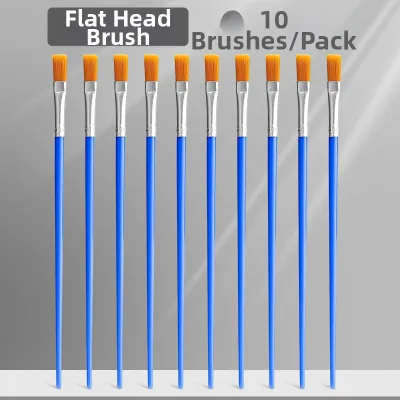
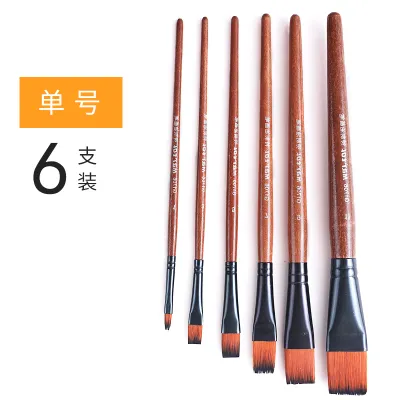
Products mentioned in this guide
4 Lazada user ratings
Haven't used it yet, but I'm sure it will be great, giving it a good review for now!
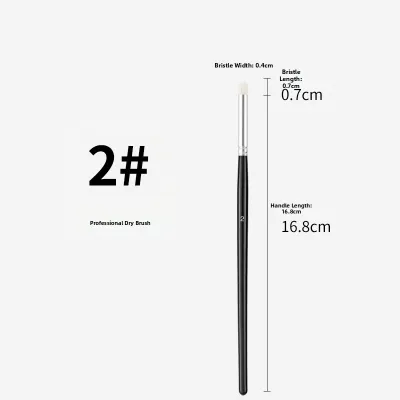
Affordable yet effective for dry brushing
90 Lazada user ratings
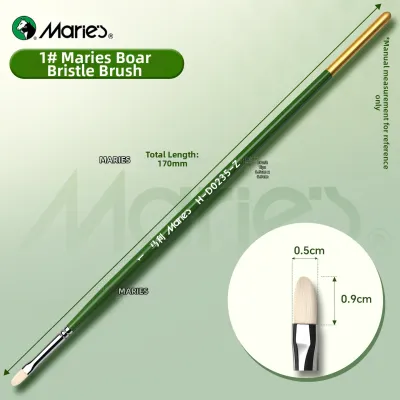
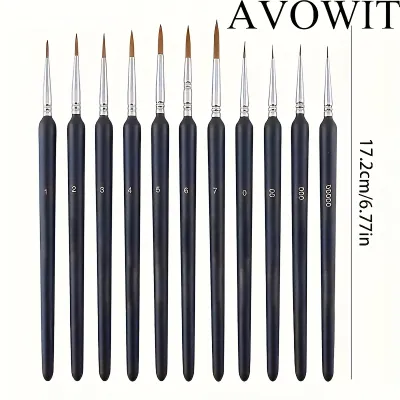
Really good, the tips are super fine and great for small surfaces.
Super quick delivery and packed perfectly. Awesome!
Everything is fine. Thank you very much.
20 Lazada user ratings
This paintbrush set is incredibly useful! It works great for oil painting, gouache, and watercolor. The variety of brush types, including fi…Read full reviewShow less
This paintbrush set is incredibly useful! It works great for oil painting, gouache, and watercolor. The variety of brush types, including fine liners, flat, and pointed brushes, is excellent. The nylon bristles are soft yet durable, with strong color absorption, so the paint doesn’t bleed or get stuck on paper. The handles are sturdy and well-made, perfect for art students and everyday painting. Overall, I highly recommend it!
These brushes really exceeded my expectations! The tips have great flexibility, and the ink flows evenly, making both the flat and pointed o…Read full reviewShow less
These brushes really exceeded my expectations! The tips have great flexibility, and the ink flows evenly, making both the flat and pointed ones super handy. They're perfect for a beginner to practice with!
It's affordable and comes with plenty of glue for shoe repairs. The brush is small, so it fits into tight spaces pretty well and works great…Read full reviewShow less
It's affordable and comes with plenty of glue for shoe repairs. The brush is small, so it fits into tight spaces pretty well and works great.
Product as described, brush head is neat and is not too soft. Exactly what I wanted ! Thanks seller for the fast delivery.
No leaks, guaranteed authentic, recommended by my teacher, great coverage, and the pen feels smooth in hand.
Prices are valid at publication and may change. Please refer to the product page for the latest price.
To prevent premature wear and ensure a smooth application, synthetic bristles are the industry standard for acrylic painting. Synthetic brushes are typically made from nylon or polyester filaments that have been chemically tapered to mimic natural hair. These synthetic fibers do not absorb water, meaning they maintain their spring, shape, and tension even when loaded with heavy-bodied acrylics. When shopping, check the brush packaging or product specifications for terms like “synthetic filament,” “interlocked synthetic,” “nylon,” or “polyester” to ensure you are purchasing a durable tool designed for acrylic use.
Round Brushes: Mastering Outlines and Controlled Fills
The round brush is perhaps the most fundamental tool in an artist’s kit, characterized by a circular ferrule and a pointed tip. The round shape creates a generous reservoir in the belly of the brush, allowing it to hold a substantial amount of paint and water. This design enables you to paint continuous strokes without constantly reloading, making it highly efficient for both sketching and detailed work.

Mastering the round brush requires precise pressure control. When you apply light pressure, using only the very tip of the brush, you can produce extremely fine, delicate lines suitable for outlining, detailing, or sketching initial compositions. As you gradually increase downward pressure, the belly of the brush spreads out, creating a wider, thicker stroke. Releasing the pressure mid-stroke allows the brush to return to a fine point, producing a tapered line that is ideal for calligraphy, organic forms, and dynamic linework.
Beyond linework, round brushes are excellent for filling in small, irregular gaps and tight spaces where a flat brush would be too clumsy. By holding the brush at a slight angle and using a gentle dabbing or swirling motion, you can distribute paint evenly into textured canvas grain. For beginners, a medium-sized round brush (such as a size 4 or 6) offers the perfect balance between detail capability and paint capacity.
Flat and Wash Brushes: Achieving Broad Coverage and Crisp Edges
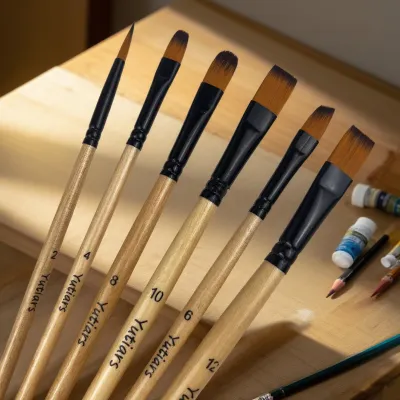
Flat brushes feature a rectangular shape with a flat, square-ended ferrule and long bristles. This structure provides two distinct painting surfaces: a broad, flat face and a sharp, chisel-like edge. The flat face is designed to hold a large volume of paint, making it the ideal choice for blocking in large areas of color, painting backgrounds, and creating wide, uniform strokes.
To achieve smooth, streak-free coverage with a flat brush, load the bristles evenly and apply the paint using long, parallel strokes. The flat profile ensures that the paint is distributed at a consistent thickness across the canvas. If you need to create sharp, geometric shapes or straight lines, turn the brush to its side and use the crisp chisel edge. By dragging the edge of the brush vertically or horizontally, you can paint precise borders and clean geometric boundaries without needing a ruler.
Wash brushes are essentially oversized flat brushes with shorter, wider bristles designed to hold maximum water and paint. They are used primarily for applying thin, transparent washes of color over large areas or for wetting the canvas before applying paint. When using a wash brush, work quickly with sweeping, horizontal motions to ensure the wash dries evenly without leaving harsh lap marks or puddles.
Filbert Brushes: Blending Colors and Painting Soft Curves
The filbert brush is a hybrid tool that combines the thick, flat ferrule of a flat brush with the curved, oval tip of a round brush. This unique geometry makes the filbert incredibly versatile, offering the broad coverage of a flat brush but with softer, rounded edges that prevent harsh lines. It is highly favored by portrait and landscape painters for its ability to create soft transitions and organic shapes.
One of the primary uses of a filbert brush is blending wet colors directly on the canvas. Because the tip is rounded, the edges of your strokes naturally feather out, allowing you to blend two adjacent colors together without creating distinct, blocky boundaries. By using a light, sweeping motion or a figure-eight stroke, you can create smooth gradients, soft shadows, and realistic skin tones.
The curved profile of the filbert is also perfect for painting organic forms such as flower petals, leaves, feathers, and clouds. By placing the brush flat against the surface and twisting your wrist as you pull the stroke, you can easily mimic the natural curves of botanical and biological subjects. Adjusting the angle of the brush during the stroke allows you to transition from a wide, soft shape to a narrow, delicate edge.
Liner and Detail Brushes: Executing Fine Lines and Intricate Work
Liner brushes, also known as rigger or script brushes, feature extremely long, narrow synthetic bristles housed in a small round ferrule. The extreme length of the bristles allows the brush to hold a surprising amount of highly fluid paint. This design is specifically engineered for executing long, continuous, unbroken lines, such as tree branches, ship rigging, whiskers, and detailed signatures.
To use a liner brush successfully, you must adjust the consistency of your acrylic paint. Heavy-bodied acrylic paint straight from the tube is too thick and will cause the long bristles to drag, split, or skip across the canvas. Mix your paint with a small amount of water or an acrylic flow improver until it reaches an ink-like, fluid consistency. This allows the paint to flow smoothly off the tip of the brush with minimal friction.
When painting with a liner brush, stabilize your hand by resting your pinky finger lightly on a dry area of the canvas or using a mahl stick. Hold the brush near the ferrule for maximum control, and drag the brush behind your hand rather than pushing it forward. Using the very tip of the bristles ensures the thinnest possible line, while slightly lowering the angle of the brush allows you to create elegant, sweeping curves with subtle variations in thickness.
Angular and Fan Brushes: Creating Textures and Special Effects
Specialty brushes like the angular flat and the fan brush are designed to simplify complex textures and reach difficult areas. The angular brush, or angle shader, features bristles cut at a precise slant. This slanted tip allows you to reach tight corners, paint sharp angles, and execute precise shading in hard-to-reach spots. By using the long point of the angle, you can draw fine lines, while using the full width of the brush allows for quick color blocking.
The fan brush is easily recognized by its flat, fan-shaped spread of bristles. Rather than holding a solid mass of paint, the splayed bristles are designed to create multiple small, parallel marks simultaneously. This makes the fan brush an exceptional tool for rendering natural textures such as grass, pine needles, distant forests, and water ripples.
To paint grass or foliage with a fan brush, load only the tips of the bristles with slightly thinned paint. Gently tap or stipple the brush onto the canvas to create a scattered, organic texture. To paint distant trees or water, drag the brush horizontally or vertically in quick, light strokes. Avoid overloading the fan brush with thick paint, as this will cause the bristles to clump together, turning your textured strokes into solid, heavy blocks.
Handling and Stroke Techniques for Better Control
Achieving precise control over your acrylic paint strokes requires more than just choosing the right brush shape; it also depends on how you hold and manipulate the tool. For fine, detailed work using round or liner brushes, hold the brush close to the ferrule, much like you would hold a pencil. This grip provides maximum stability and allows for micro-adjustments of the wrist and fingers. For broad, expressive strokes with flat or filbert brushes, hold the brush further back on the handle, which encourages fluid movement from the elbow and shoulder.
Managing the paint load on your brush is equally critical. Only load paint onto the bottom half to two-thirds of the bristles; never allow paint to reach the metal ferrule. If paint enters the ferrule, it is incredibly difficult to clean out and will cause the bristles to spread and lose their shape permanently. Ensure the paint is evenly distributed throughout the active portion of the bristles to avoid dry dragging or sudden dripping.
Finally, avoid applying excessive downward pressure during your strokes. Pushing the brush too hard against the canvas bends the bristle belly, which can damage the synthetic fibers and cause the brush to lose its spring. Instead, let the quality of the synthetic bristles and the fluid consistency of your paint do the work, applying only enough pressure to achieve the desired stroke width.
Cleaning and Preserving Acrylic Brushes to Extend Their Life
Because acrylic paint dries into a water-resistant plastic, proper maintenance is essential to preserve the shape and performance of your synthetic brushes. During an active painting session, never let paint dry on your brushes. Keep a jar of clean water nearby and rinse your brushes thoroughly whenever you switch colors or pause your work. If you need to set a brush down temporarily, lay it flat on a damp paper towel rather than leaving it submerged face-down in water, which can bend the bristles and dissolve the glue holding the ferrule.
Once your painting session is complete, perform a deep clean using mild soap and lukewarm water. Gently massage the soap into the bristles, working from the ferrule down to the tip, to release any trapped pigment. Avoid using hot water, as it can soften the adhesive inside the ferrule and cause the bristles to shed. Rinse the brush thoroughly until the water runs completely clear and no soap residue remains.
After cleaning, gently reshape the damp bristles with your fingers to restore their original profile. Lay the brushes flat on a clean towel or hang them upside down using a brush holder to dry. Never dry your brushes standing upright in a cup; water will run down into the ferrule, swelling the wooden handle and loosening the glue, which eventually ruins the brush.
Frequently Asked Questions (FAQ)
How many acrylic paint brushes do beginners actually need?
A beginner does not need a massive collection of brushes to start painting effectively. A highly functional starter kit requires only three core brushes: a medium round brush (size 6) for details and outlines, a medium flat brush (1/2 inch) for broad coverage and straight edges, and a medium filbert brush (size 6) for blending and organic shapes. This minimal set allows you to practice almost every fundamental stroke technique before investing in specialized tools like fan or liner brushes.
Can I use watercolor or oil brushes for acrylic painting?
It is highly recommended to avoid using natural hair watercolor or oil brushes for acrylic painting. The alkaline nature of acrylic binders and the frequent, vigorous cleaning required will quickly dry out and damage delicate natural fibers like sable. However, high-quality synthetic brushes are highly versatile and can be safely shared across watercolor, acrylic, and oil mediums, provided they are thoroughly cleaned and dried between sessions to prevent cross-contamination.
What should I do if acrylic paint dries on my brush?
If acrylic paint accidentally dries on your synthetic brush, do not throw it away immediately. Soak the bristles in a specialized liquid brush restorer or rubbing alcohol for several hours to soften the dried acrylic polymer. Once softened, gently comb out the paint residue using a fine-toothed brush comb or your fingernails, then wash with mild soap and water. Keep in mind that if paint has dried deep inside the metal ferrule, the brush may never fully regain its original, crisp shape.

Community discussion
Share your experience or ask a question. Comments are reviewed before publication.