
Finding the perfect A6 dotted notebook for wet writing instruments like fountain pens and markers is a balancing act that goes far beyond brand reputation. While a compact A6 notebook is highly portable and convenient for daily journaling, its small page size means your writing is often denser, putting more ink on a concentrated area of paper. Preventing unsightly bleed-through (where ink leaks through to the other side of the page) and ghosting (where writing is visible as a shadow on the reverse side) depends on the precise interaction between paper weight, surface sizing, and the specific chemical formulation of your ink.
Rather than relying on generic brand claims, choosing the right notebook requires an understanding of how paper is manufactured and how it reacts to liquid. By examining key physical specifications, matching your ink types to the correct paper properties, and performing simple home tests, you can find a notebook that keeps your thoughts clean and legible on both sides of every sheet. This guide provides a practical framework to evaluate paper quality and select the ideal A6 dotted notebook for your creative and writing needs.
Key Paper Specifications to Check Before Buying
When shopping for an A6 dotted notebook, the first specification you will encounter is paper weight, measured in grams per square meter (GSM). While it is tempting to assume that a higher GSM automatically translates to better paper quality, weight is only one part of the equation. A higher GSM, such as 100 GSM or 120 GSM, provides a thicker physical barrier that helps reduce ghosting, but it does not inherently prevent ink from spreading or bleeding if the paper fibers are highly absorbent.
Products mentioned in this guide
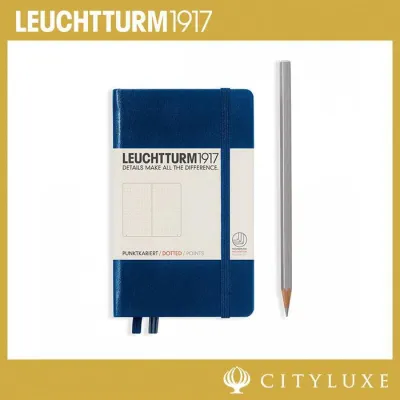
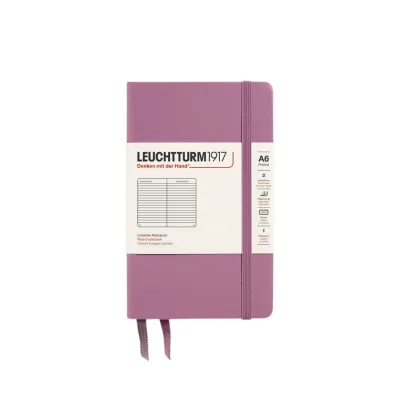
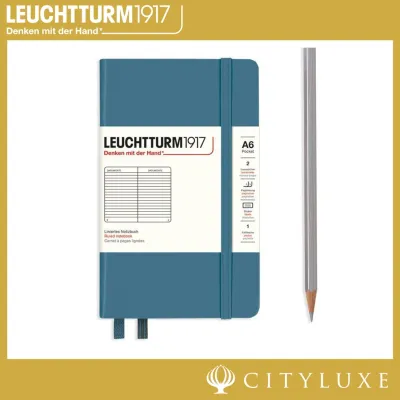
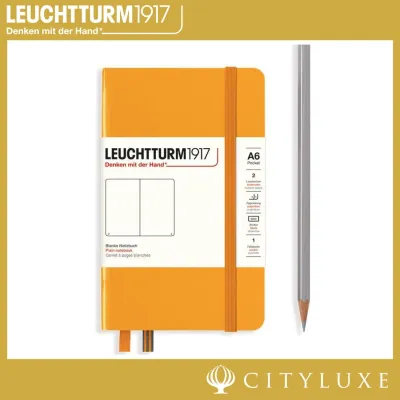
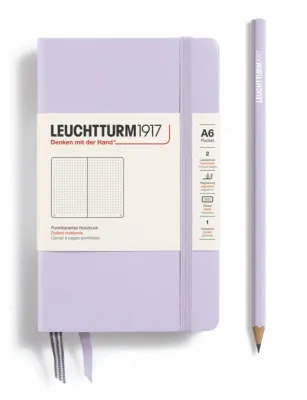
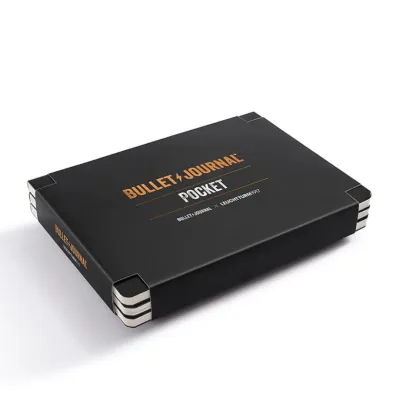
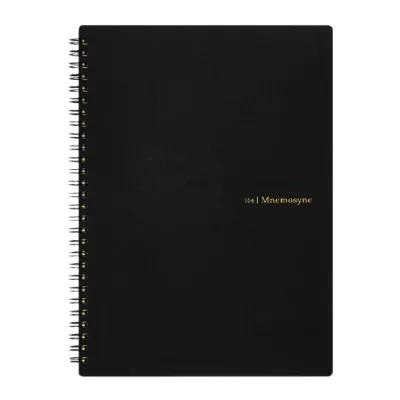
Prices are valid at publication and may change. Please refer to the product page for the latest price.
The critical factor that prevents ink from soaking into the paper fibers is surface sizing. Sizing is a chemical treatment applied during the papermaking process that regulates how the paper absorbs liquid. Well-sized paper allows ink to sit on the surface and dry slowly, which preserves crisp line edges and prevents feathering (where ink spreads outward in tiny branches). If a notebook lacks adequate sizing, even a thick 160 GSM paper can suffer from severe bleed-through when paired with a wet fountain pen.
Beyond weight and sizing, the texture and color of the paper significantly affect your writing experience. Smooth, coated papers are highly favored for fountain pens because they minimize nib resistance and allow shading and sheen properties of the ink to stand out. However, these smooth coatings also extend drying times, which can lead to smudging in a compact A6 format where pages are turned frequently. Conversely, textured or toothy papers dry faster but may cause broader lines and more ink absorption.
In humid climates, paper can absorb ambient moisture from the air, which may slightly increase drying times and alter how ink behaves on the page. Storing your notebooks in a dry environment helps maintain the paper’s original sizing performance and prevents the fibers from becoming overly receptive to wet inks. This is a crucial consideration for maintaining crisp lines over long-term storage.
The brightness and undertone of the paper also play a role in visual contrast. Cream or off-white pages are gentler on the eyes for long writing sessions and complement warm ink tones, but they can alter the perceived color of vibrant marker inks. Bright white pages offer the most accurate color reproduction for artistic layouts but may highlight ghosting more prominently than cream-colored alternatives. Understanding these trade-offs helps you narrow down your choices based on your visual preferences.
Evaluating Ink Compatibility for Wet Pens
The performance of any A6 dotted notebook is highly dependent on the specific type of ink you use. Fountain pen inks are primarily water-based and rely on dyes or pigments suspended in water. High-flow or “wet” fountain pen inks flow generously from the nib, requiring paper with excellent sizing to prevent the ink from sinking too deeply. If you prefer using broad or stub nibs, the volume of ink deposited on the page increases dramatically, making paper quality even more critical.

Markers present a different set of challenges depending on their solvent base. Standard water-based markers, such as those used for bullet journaling and highlighting, behave similarly to fountain pen inks but often contain surfactants that encourage the ink to penetrate the paper. Alcohol-based markers, on the other hand, are designed to blend smoothly by dissolving and spreading rapidly through paper fibers. Because alcohol solvents bypass traditional paper sizing, they will bleed through almost all standard notebook papers, regardless of GSM.
Writing pressure and technique also influence how ink interacts with the paper. Applying heavy pressure with a fine-liner or fountain pen can micro-puncture the paper’s surface coating, creating a direct pathway for ink to seep into the inner fibers. Similarly, pausing mid-stroke or holding a marker in one spot for too long deposits a concentrated pool of ink that can easily overwhelm the paper’s absorption capacity, leading to localized bleed-through.
To avoid disappointment, always check manufacturer labels and product descriptions for specific compatibility notes. Some notebook brands explicitly state whether their paper is optimized for fountain pens or if it is compatible with light watercolor washes. If you plan to use alcohol-based markers, look for notebooks that feature specialized barrier paper or coated marker paper, as standard dotted notebooks are rarely designed to handle alcohol solvents without bleed-through.
How to Test and Verify Paper Quality at Home
Because paper formulations can change and individual writing setups vary, the most reliable way to assess a notebook’s quality is to conduct a standardized test on an inconspicuous page. When you receive a new A6 dotted notebook, dedicate the very last page or a back corner to a pen test. Use your most frequently used fountain pens, markers, and highlighters to write a series of sample lines, grids, and solid color blocks.
As you perform the test, pay close attention to how the ink behaves immediately after touching the paper. Note the drying time by gently touching the ink at five-second intervals; this is particularly important for A6 notebooks where quick-drying pages prevent smudging when you close the book. Observe whether the ink lines remain sharp and crisp or if they begin to feather and spread along the paper fibers, which indicates poor surface sizing.
Once the ink has dried completely, turn the page over to inspect the reverse side under natural light. Evaluate the level of ghosting, which is the visibility of the writing through the paper. While some ghosting is normal for thinner papers, it should not prevent you from writing on the other side. Next, check for actual bleed-through, where spots of ink have physically penetrated the paper and marked the reverse side.
Finally, test the paper’s tolerance for heavy ink application by drawing a small solid square or writing a word with a slow, deliberate stroke. This simulates the ink pooling that occurs at the end of letters or when drawing decorative elements. If the paper can handle these concentrated pools without bleeding through to the next page, it is highly likely to perform exceptionally well during daily, multi-layered journaling sessions.
Decision Framework: Choosing the Right A6 Dotted Notebook
To choose the ideal A6 dotted notebook, start by identifying your primary writing instrument. If your daily carry consists of wet fountain pens with medium or broad blades, prioritize notebooks that feature coated, high-sizing paper. While these papers may have longer drying times, they excel at keeping wet ink on the surface, preserving line crispness, and showcasing the unique shading properties of your inks without bleeding.
If your routine involves heavy use of water-based markers, brush pens, and creative layouts, look for notebooks with a higher paper weight, ideally between 100 GSM and 160 GSM. The extra thickness provides the physical bulk needed to absorb the larger volume of water-based ink without ghosting, allowing you to use both sides of the page for colorful designs. However, ensure the paper still has adequate sizing to prevent the marker ink from feathering.
For those who rely heavily on alcohol-based markers for sketching or coloring, standard dotted notebooks are generally not suitable as a standalone option. In this scenario, you should look for specialized notebooks that contain bleed-proof marker paper, or accept that you will need to use a protective backing sheet behind your active page. Alternatively, switching to water-based pigment markers can offer a similar creative effect with significantly less risk of bleed-through.
Consider how your choice of ink colors and properties fits into your workflow. If you enjoy using highly saturated, shimmering, or sheening inks, a smooth, non-absorbent paper is essential to allow the metallic particles and sheen to dry on top of the page where they can reflect light. By matching your specific tool kit to the physical properties of the paper, you can confidently select an A6 dotted notebook that elevates your writing experience.
Frequently Asked Questions (FAQ)
Does a higher GSM always prevent bleed-through with markers?
No, a higher GSM does not guarantee protection against bleed-through, especially when using alcohol-based markers. While a higher GSM means the paper is thicker and can hold more liquid, alcohol-based inks are formulated to penetrate fibers rapidly and will bypass standard paper thickness. For effective prevention, the paper must have specialized surface sizing, a protective barrier coating, or be specifically engineered as bleed-proof marker paper.
Are A6 dotted notebooks suitable for daily journaling with wet pens?
Yes, A6 dotted notebooks are excellent for daily journaling due to their portability, but they require some adjustments when using wet pens. Because the page size is compact, your hand may rest on recently written lines, increasing the risk of smudging wet ink. To ensure a smooth experience, pair your wet pens with fast-drying inks, or keep a small sheet of blotting paper inside your notebook to absorb excess ink before closing the book or turning the page.

Community discussion
Share your experience or ask a question. Comments are reviewed before publication.