
When comparing A5 binder refills, paper quality is not a single universal standard but a combination of characteristics that interact directly with your writing instruments. Because independent, standardized testing data for every brand is rarely available, selecting the best option requires understanding paper specifications and conducting your own observable checks for smoothness, bleed-through, and feathering. In Singapore’s humid climate, these paper characteristics become even more critical, as ambient moisture can alter how paper fibers absorb ink and how quickly your writing dries. By focusing on measurable specifications and simple hands-on tests, you can reliably find the perfect refill pages for your daily setup.
Key Paper Specifications to Check Before Buying
Before purchasing a pack of A5 binder refills, reading the product packaging or online specifications can save you from a frustrating writing experience. The most common metric you will encounter is GSM, or grams per square meter, which measures the weight and density of the paper. Standard office paper typically sits around 70 to 80 GSM, which is suitable for basic ballpoint writing but prone to ghosting with wetter inks. For a more premium feel and better resistance to ink penetration, look for refills rated between 90 and 120 GSM. Keep in mind that thicker paper means fewer sheets can comfortably fit inside your binder rings.
Beyond weight, the surface finish of the paper dictates how your pen behaves. Coated papers undergo a manufacturing process that fills in the gaps between wood fibers, creating an ultra-smooth surface that keeps ink on top of the page rather than letting it soak in. This finish preserves vibrant ink colors and sharp lines, though it extends drying times. Uncoated papers retain a natural, slightly textured feel that absorbs ink faster, making them highly practical for quick note-taking but more susceptible to bleeding if the paper fibers are loose.
Products mentioned in this guide
Prices are valid at publication and may change. Please refer to the product page for the latest price.
Finally, pay attention to the chemical treatment and ruling formats of the refills. If you plan to archive your notes, journals, or sketches for several years, look for labels indicating the paper is acid-free or wood-free. Acid-free paper resists yellowing and degradation over time, preserving your work in pristine condition. Additionally, inspect the ruling formats—whether lined, dotted, grid, or blank—to ensure the margins are consistent across different batches and that the lines are printed in a subtle, non-intrusive ink color.
How to Test Smoothness, Feathering, and Bleed-Through
Since you cannot always rely on brand names to guarantee performance, performing a few simple, observable tests on a sample sheet is the most reliable way to evaluate paper quality. To test smoothness, perform the “pen glide” test. Using your favorite pen, write a series of rapid loops, figure-eights, and long diagonal lines across the page. Pay close attention to the tactile feedback; a high-quality smooth paper will allow the pen tip to glide effortlessly without catching, while a lower-quality sheet might feel scratchy or produce a noticeable dragging sensation.

To evaluate bleed-through and ghosting, write a few words using your wettest pen or a highlighter, applying normal writing pressure. Turn the page over and examine the reverse side under both direct overhead light and an angled light source. Ghosting occurs when you can see the shadow of the writing through the paper, which is common with thinner sheets but still allows you to write on both sides. Bleed-through, however, occurs when the ink physically penetrates the paper fibers and spots the back of the page, rendering the reverse side unusable.
Feathering is another common issue that occurs when ink spreads unpredictably along the paper fibers, making your handwriting look fuzzy or bloated. To check for feathering, write a few characters and inspect the edges of the ink lines under close lighting or with a simple magnifying tool. High-quality paper keeps the ink lines sharp, crisp, and true to the pen’s tip size. If the edges of the lines look like tiny spiderwebs or branches, the paper fibers are too loose or absorbent for that specific ink formula.
Matching Paper Characteristics to Your Writing Instruments
Paper performance is entirely relative to the writing instrument you use, meaning the best refill for a pencil user might be highly frustrating for a fountain pen enthusiast. Fountain pens and other wet-ink instruments require high-density, well-sized, or coated papers. Because these pens lay down a significant volume of liquid ink, they need a surface that resists rapid absorption to prevent feathering and bleed-through. If you write primarily with fountain pens, look for specialized smooth refills that explicitly mention ink compatibility.
Gel and rollerball pens are incredibly popular for daily writing in Singapore, but they require a careful balance of paper characteristics. Because gel ink is water-based, it can smudge easily on highly coated, non-absorbent papers, especially in humid environments where moisture slows down evaporation. For these pens, a semi-smooth, uncoated paper around 80 to 90 GSM is often ideal. This combination provides enough absorption to dry the ink within a few seconds while remaining dense enough to prevent the ink from bleeding through to the other side.
If you prefer traditional ballpoint pens or mechanical pencils, your options are much broader. Ballpoints use oil-based inks that rarely bleed or feather, even on cheap, low-GSM paper. In fact, ballpoints and pencils often perform better on slightly textured, uncoated papers. The subtle texture, or “tooth,” of the paper helps the ballpoint’s tip roll smoothly and provides the necessary friction to wear down pencil graphite, resulting in a controlled and satisfying writing experience without slipping.
Verifying Binder Compatibility and Punch Specifications
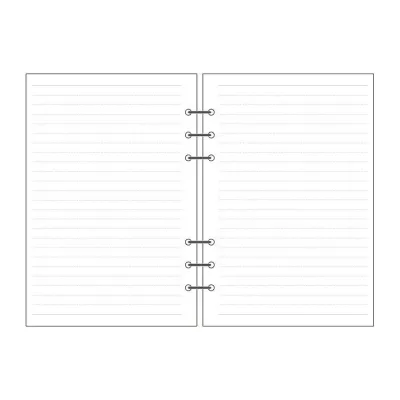
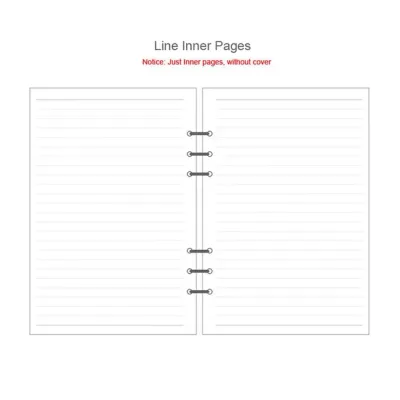
Even the highest-quality paper is useless if it does not physically fit into your binder system. While “A5” refers to a standard paper size of 148mm by 210mm, the hole-punching configurations can vary wildly between manufacturers. The most common standard for A5 binders is the 6-hole system, but the spacing between those holes is not always identical. Standard 6-hole refills typically feature two groups of three holes, with a wider gap in the middle. Always measure your binder’s ring spacing or bring an old page with you to local stationery shops to compare directly.
In addition to hole spacing, check the inner margin width of the refills. The inner margin is the blank space between the punched holes and the start of the writing grid or lines. If this margin is too narrow, your written notes will sit too close to the binder rings, making them difficult to read and write near. A generous inner margin ensures that your pen has plenty of clearance from the rings and that your content remains fully visible when you turn the pages.
Finally, consider how the thickness of your chosen paper impacts your binder’s overall capacity. Binder rings are measured by their internal diameter, and overstuffing them leads to torn pages and jammed mechanisms. If you choose heavy 120 GSM refills, you will only be able to fit about 60 to 80 sheets in a standard 15mm ring binder before page-turning becomes difficult. If you need to carry a large volume of notes, opting for a high-density but thinner 80 GSM refill will allow you to carry up to 120 sheets without straining the binder rings.
Decision Framework: Choosing the Right A5 Refill
To simplify your shopping process, use this quick decision framework to match your writing style to the correct A5 binder refill specifications:
- For Fountain Pens and High-Ink Artistry: Prioritize 90 to 120 GSM refills with a smooth, coated finish. Look for acid-free specifications to ensure your work does not degrade over time, and accept that you may need to wait a few extra seconds for the ink to dry completely.
- For Daily Gel Pen and Rollerball Writing: Opt for 80 to 90 GSM semi-smooth, uncoated refills. This provides the best compromise between quick drying times to prevent smudging and sufficient density to stop ink from bleeding through to the back of the page.
- For High-Volume Note-Taking and Budget Efficiency: Choose standard 70 to 80 GSM uncoated refills. These are highly cost-effective, allow you to pack more sheets into a single binder, and work perfectly with standard ballpoint pens and pencils.
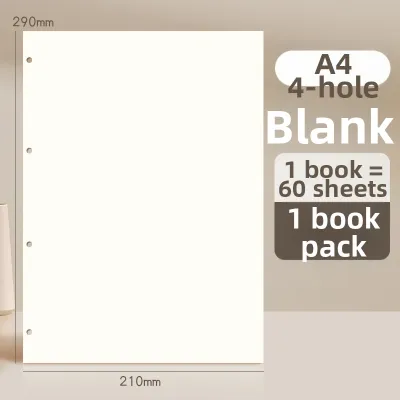
- For Specialized or Proprietary Binders: Always measure your binder's ring spacing and check the hole count before purchasing. If you are using a non-standard multi-ring binder, you may need to purchase refills specifically designed by that binder's manufacturer to ensure a perfect fit.
Frequently Asked Questions (FAQ)
Can I mix different A5 binder refill brands in the same notebook?
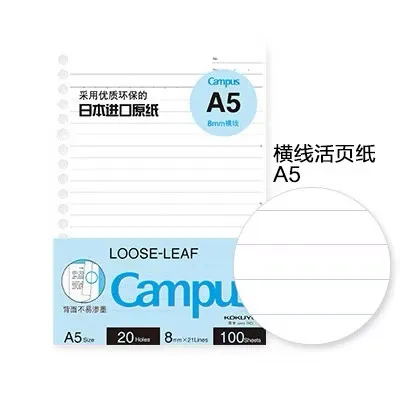
Yes, you can mix different A5 binder refill brands in the same notebook, provided their hole configurations and spacing match your binder’s ring layout. While the physical paper size of A5 is standard, the hole punches are not. Most standard 6-ring A5 binders will accept generic 6-hole refills, but proprietary brands often use unique spacing or a higher number of holes (such as 20-hole systems) that will not align with standard rings. Before mixing brands, overlay a sheet from each pack to verify that the holes line up perfectly and that the inner margins are wide enough so that the pages turn smoothly without catching on one another.
Community discussion
Share your experience or ask a question. Comments are reviewed before publication.