
Selecting the right A4 printer paper weight depends on your specific printing task, budget, and printer capabilities. For everyday office printing and standard documents, 80gsm is the universal benchmark. If you are printing high-volume internal drafts where cost-efficiency is the priority, 70gsm paper is the ideal choice. For premium client presentations, double-sided documents, or formal contracts, upgrading to 100gsm paper provides the necessary stiffness and opacity to prevent ink show-through.
What GSM Means and How It Affects Your Prints
GSM stands for Grams per Square Meter, measuring paper density and thickness rather than the physical weight of a single A4 sheet. A higher GSM rating directly translates to a denser, thicker sheet of paper.
As GSM increases, the paper’s opacity and stiffness improve. High opacity is essential for double-sided printing to prevent text or images from showing through on the reverse side. Increased stiffness ensures that the paper remains flat, handles easily without tearing, and presents a professional feel.
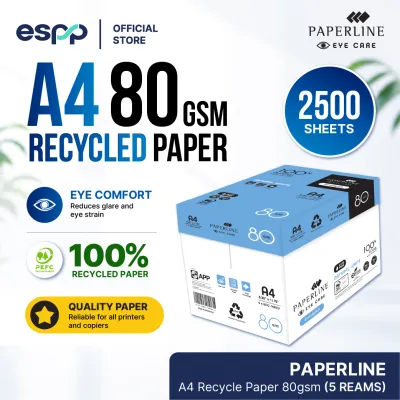
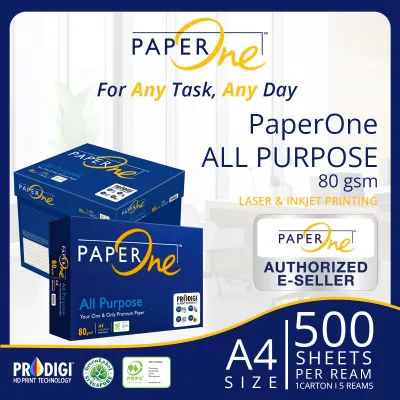
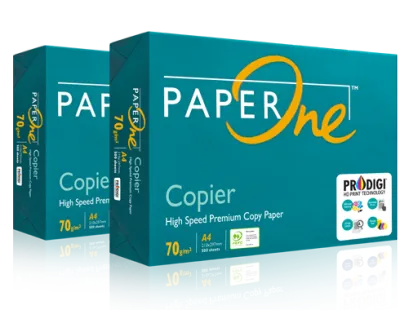
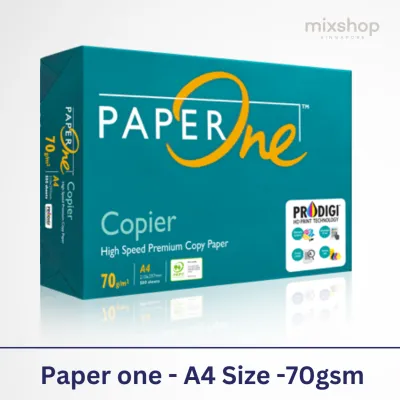
Products mentioned in this guide


![PaperOne™ Copier Paper 70gsm / 75gsm Copy Paper A4 [1 Box]](https://img.lazcdn.com/g/p/62f961291078a3b12171dd45eea2a9a4.jpg_400x400q80.jpg_.webp)
Prices are valid at publication and may change. Please refer to the product page for the latest price.
Note that brightness and finish are separate specifications. Brightness, often measured using the CIE whiteness index, refers to how much light the paper reflects and is independent of weight. Similarly, whether a paper has a matte, satin, or glossy finish is a surface treatment that does not dictate its GSM. You can easily find a highly reflective, bright white 70gsm paper, just as you can find a duller, cream-colored 100gsm sheet.
70gsm vs 80gsm vs 100gsm: Which Weight Fits Your Task?
Choosing between 70gsm, 80gsm, and 100gsm involves balancing cost, document presentation, and printer performance. While heavier paper feels more luxurious, using it for every task can unnecessarily inflate your stationery budget. Conversely, opting for the thinnest paper to save money can result in flimsy, unprofessional documents that are difficult to read due to ink bleeding.

The physical feel of these three weights varies noticeably. A 70gsm sheet feels light and flexible, making it highly cost-efficient for bulk printing but prone to creasing. An 80gsm sheet offers a familiar, balanced texture that feels substantial enough for general business use. A 100gsm sheet feels distinctly premium, heavy, and rigid, immediately signaling high quality to anyone handling the document.
To optimize your office or home setup, map your printing tasks to the appropriate weight class. Lighter weights are perfect for temporary, single-sided prints, while standard weights handle daily correspondence. Reserve the heaviest weights for external communications where first impressions are critical.
70gsm Paper: High-Volume Drafts and Internal Documents
Ideal Use Cases 70gsm paper is the go-to option for high-volume draft printing, internal memos, and temporary documents. It is also highly suitable for basic note-taking, packing slips, and printing out reference materials that will be discarded or filed away shortly after use.
Trade-offs and Limitations The primary trade-off of 70gsm paper is its low opacity. If you attempt double-sided printing, the ink will easily show through, making the document difficult to read. Additionally, the thinner material has a less premium feel and is more susceptible to curling, especially in humid environments like Singapore, where ambient moisture can quickly soften thin paper fibers.
Cost and Bulk Benefits On the positive side, 70gsm paper is highly economical. It offers the lowest cost per ream, making it the most budget-friendly choice for businesses processing thousands of pages monthly. Furthermore, because the sheets are thinner, a stack of printed documents takes up significantly less physical storage space in filing cabinets and binders.
80gsm Paper: The Standard for Everyday Professional Use
Ideal Use Cases 80gsm paper is the undisputed standard for everyday professional and home use. It is the ideal choice for standard business correspondence, student assignments, reports, and everyday client-facing documents that require a clean, reliable presentation.
The Perfect Balance This weight class strikes an excellent balance between opacity and printer compatibility. It provides sufficient opacity for clean single-sided printing with minimal show-through under normal lighting. Moreover, almost every standard office copier and home printer is calibrated to feed 80gsm paper flawlessly, minimizing the risk of paper jams.
Professional Appeal Using 80gsm paper ensures your documents look and feel professional without incurring the premium costs associated with heavier specialty papers. It is sturdy enough to be handled repeatedly, signed, and archived without losing its structural integrity.
100gsm Paper: Premium Outputs and Double-Sided Printing
Ideal Use Cases When presentation quality is paramount, 100gsm paper is the preferred choice. It is ideal for formal business proposals, double-sided reports, certificates, resumes, and important legal contracts that require a tactile sense of importance.
Premium Feel and Ink Handling The increased thickness of 100gsm paper provides a luxurious, stiff feel that resists bending. It handles heavy ink coverage exceptionally well, making it perfect for documents featuring colorful charts, graphics, or high-resolution images. The high opacity ensures that double-sided prints remain perfectly legible with virtually zero show-through.
Printer Feed Considerations While 100gsm paper offers superior quality, it requires careful handling. Because the paper is thicker and stiffer, some standard home printers may struggle to pull it through tight roller paths. Always verify that your printer can handle this weight to avoid frustrating multi-sheet feeds or internal jams.
Checking Printer Compatibility and Ink Bleed Risks
Before purchasing a large quantity of high-GSM paper, it is essential to verify your printer’s physical limitations. Every printer has a maximum supported paper weight, which is typically listed in the user manual or on the manufacturer’s specification label. Standard office multi-function printers easily handle up to 120gsm or more, but compact home inkjet printers may have a lower threshold, sometimes capping out at 90gsm for standard tray feeding.
To ensure optimal print quality and prevent ink smudging, adjust your printer’s media settings before sending a job to print. When using 100gsm paper, select settings such as “Heavy Paper,” “Thick Paper,” or “Cardstock” in your print dialogue box. This instruction tells the printer to adjust its roller speed and, in the case of laser printers, increase the fuser temperature to ensure the toner or ink bonds correctly and dries completely.
Keep an eye out for observable signs of incompatibility during your initial test prints. If you experience frequent paper jams, notice the edges of the paper curling excessively as they exit the machine, or find that the ink remains wet and smudges when touched, your printer is likely struggling with the paper weight or thickness. In such cases, stop printing immediately and switch to a lighter weight, such as 80gsm, to protect your equipment from damage and ensure clean, dry prints.
Frequently Asked Questions (FAQ)
Can I use 100gsm paper in any standard home inkjet printer?
While most modern home inkjet printers can accommodate 100gsm paper, some entry-level or older models may experience feeding issues. To prevent jams, check your printer’s manual for its maximum paper weight limit. If your printer features a rear feed slot or a manual bypass tray, use it for 100gsm paper, as this provides a straighter path that reduces the strain on the roller mechanism.
Does higher GSM mean the paper is brighter or whiter?
No, GSM only measures the weight and density of the paper, not its color or reflective properties. Paper brightness is determined by the manufacturing process, specifically the use of optical brightening agents and bleaching methods. It is entirely possible to find a 70gsm paper with a high whiteness rating that looks brighter than a standard 100gsm sheet. Always check the CIE whiteness rating on the packaging if brightness is your primary concern.

Community discussion
Share your experience or ask a question. Comments are reviewed before publication.