
When selecting paper for your home or office printer, the choice often comes down to paper weight, with 80gsm and 90gsm being two of the most common options. The term “90gsm” refers to the density and weight of the paper, indicating that a single square meter of this paper weighs exactly 90 grams. Compared to the standard 80gsm paper found in most office copiers, 90gsm paper is slightly heavier, thicker, and more opaque. This makes it an excellent choice for double-sided printing, formal correspondence, and documents containing color graphics, where minimizing ink show-through is essential.
What 90gsm Actually Means for A4 Paper
To understand what 90gsm means for an A4 sheet, it helps to break down the acronym. GSM stands for Grams per Square Meter. Because an A4 sheet is exactly one-sixteenth of a square meter, measuring 210 by 297 millimeters, a single sheet of 90gsm A4 paper actually weighs approximately 5.6 grams. This measurement is a standard industry metric used to classify paper density rather than its direct physical thickness.
While weight and thickness are closely related, they are not identical. The actual thickness of a sheet, often referred to as its caliper, can vary between different paper manufacturers even if both products are rated at 90gsm. This variation occurs because of differences in the wood pulp fibers used, the pressing process during manufacturing, and any surface coatings applied to the paper. For example, a highly compressed, smooth satin-finish paper might feel thinner than a more textured, matte-finish paper of the exact same weight.
Products mentioned in this guide
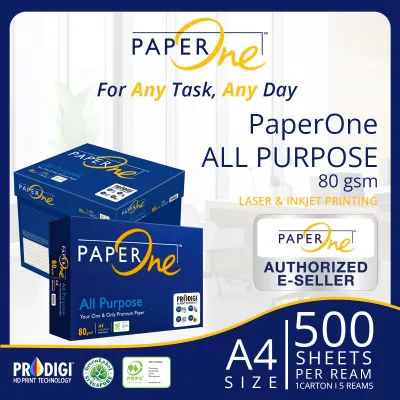
![PaperOne™ Digital Premium Quality 85gsm / 80gsm Carbon Neutral Copy Paper A4 [1 Box]](https://img.lazcdn.com/g/p/314e28db684b5a59446140a7a613d0c3.jpg_400x400q80.jpg_.webp)
Prices are valid at publication and may change. Please refer to the product page for the latest price.
In terms of physical feel, 90gsm paper offers a noticeable step up in quality from lighter alternatives. When you hold a sheet of 90gsm A4 paper, it exhibits greater stiffness and less drape than standard paper. It resists bending under its own weight, giving it a professional, premium feel that immediately communicates care and quality to anyone handling the document.
90gsm vs 80gsm: Key Differences in Everyday Printing
When comparing 90gsm to standard 80gsm paper in daily operations, several practical performance differences become apparent. The most significant of these is opacity. Because 90gsm paper contains more fiber mass per square inch, it is naturally more opaque. When you print on both sides of an 80gsm sheet, text and images from the reverse side often shadow through, making the document harder to read. Upgrading to 90gsm significantly reduces this show-through, ensuring that double-sided reports look clean and professional.

Ink and toner handling also differ between the two weights. Inkjet printers spray liquid ink onto the paper surface, which can cause lighter 80gsm paper to buckle, warp, or wrinkle if the page contains heavy color blocks or dark graphics. The denser structure of 90gsm paper absorbs these liquids more evenly, maintaining its flat shape and allowing for faster drying times without warping. For laser printers, the heavier weight holds dry toner exceptionally well, though the printer’s heating element must work slightly harder to fuse the toner to the thicker surface.
Feed reliability is another area where paper weight plays a role. Standard 80gsm paper is highly flexible, which is ideal for high-speed office copiers but can sometimes lead to multi-sheet feeding or static clinging in humid environments. The added stiffness of 90gsm paper helps sheets separate cleanly in the printer tray, reducing the likelihood of double-feeding. However, because it is stiffer, it requires a well-maintained paper path to prevent curling as it passes through the printer’s internal rollers.
When to Choose 90gsm Over Standard 80gsm
Deciding whether to invest in 90gsm paper depends largely on the nature of your documents and your target audience. The premium weight of 90gsm is ideal for client-facing materials, formal business proposals, resumes, and legal contracts. If you are printing newsletters, brochures, or presentations with colorful charts and diagrams, the extra density ensures the colors look vibrant and do not bleed through to the other side. It is also the preferred choice for any document intended for double-sided printing.
Conversely, standard 80gsm paper remains the industry benchmark for high-volume, everyday printing. If you are printing internal drafts, single-sided text documents, packing slips, or temporary worksheets, 80gsm is highly sufficient. It is more cost-effective and takes up less physical storage space, making it the practical choice for bulk administrative tasks where presentation quality is secondary to utility.
When evaluating the cost-to-benefit ratio, consider the lifespan and purpose of the document. While a ream of 90gsm paper costs a few extra S$ compared to standard 80gsm, the investment is easily justified if it enhances your professional image or improves the readability of double-sided prints. For high-volume offices, a hybrid approach—using 80gsm for daily drafts and keeping a tray of 90gsm for final client deliverables—often provides the best balance of economy and quality.
Printer Compatibility and Handling Tips
Before purchasing 90gsm paper in bulk, it is important to ensure your printing equipment can handle the extra weight. Most modern office copiers and home printers are designed to accommodate paper weights up to 120gsm or higher, but compact or older models may have lower limits. Always consult your printer’s user manual or the manufacturer’s online specifications to verify the maximum supported paper weight for each input tray.
To achieve the best print quality, adjust your printer’s software settings before sending a job to the queue. Instead of leaving the paper type on the default “Plain Paper” setting, select “Heavy Paper,” “Bond,” or “90g” if the option is available. This tells the printer to adjust its feed speed and fuser temperature, ensuring that laser toner is fully bonded to the thicker sheet or that inkjet ink has sufficient time to dry without smudging.
Proper storage is also crucial for maintaining the integrity of heavier paper, especially in warm, humid climates. Paper fibers naturally absorb moisture from the air, which can cause the edges of the sheets to curl and lead to frequent paper jams. Keep your 90gsm paper sealed in its original moisture-resistant wrapper until you are ready to load it into the printer. Store the reams flat on a shelf rather than upright, and keep them away from direct sunlight, air conditioning vents, or damp floors.
Frequently Asked Questions (FAQ)
Is 90gsm paper considered cardstock or heavy card?
No, 90gsm paper is not considered cardstock. True cardstock and heavy cover papers typically start at around 160gsm and can range up to 300gsm or more for business cards and invitations. A 90gsm sheet is classified as a premium, mid-weight writing or copy paper. It remains highly flexible, folds easily without cracking, and is designed to feed smoothly through standard office printers.
Will 90gsm paper work in all standard home inkjet printers?
Most standard home inkjet printers can easily handle 90gsm paper, as their feed mechanisms are generally rated for weights up to 105gsm or 120gsm. However, some ultra-compact printers or those with highly curved paper paths may experience occasional feed issues. To prevent mechanical strain or paper jams, always check your specific printer manual’s media specifications before loading heavier paper.
Does 90gsm paper prevent highlighter ink from bleeding through?
While 90gsm paper offers significantly better resistance to ink bleed-through than standard 80gsm paper, it does not offer a complete guarantee. Bleed-through depends heavily on the type of highlighter used, the wetness of the ink, and the pressure applied during use. For the best results, use highlighters with dry or fast-drying inks, and perform a quick test on an inconspicuous corner of the page first.
Community discussion
Share your experience or ask a question. Comments are reviewed before publication.