
Finding the right A4 notebook in Singapore often comes down to how the paper interacts with your favorite writing tools. In our humid tropical climate, paper can absorb ambient moisture over time, which can alter how ink behaves on the page. While one notebook might feel incredibly smooth under a ballpoint pen, it could feather or bleed when paired with a wet fountain pen or a heavy gel ink. To make an informed choice, you need to look past marketing buzzwords and focus on measurable paper specifications like weight, surface treatment, and opacity. By understanding these core characteristics, you can easily identify which notebook will hold up to your daily writing, sketching, or printing needs without messy ink bleed or smudging.
Understanding Paper Weight, Sizing, and Opacity in A4 Notebooks
Paper weight is measured in grams per square meter (GSM), which indicates the density and physical thickness of the sheet. In standard A4 notebooks, you will typically find weights ranging from 70 GSM to 100 GSM or higher. While a higher GSM generally means a thicker, more robust page that resists tearing, it is not the sole indicator of how well the paper handles ink. The manufacturing process determines how tightly the fibers are packed, which affects both the stiffness of the page and its overall durability.
Surface sizing is a critical manufacturing treatment where starch or other compounds are applied to the paper fibers. This process regulates how porous the paper is, directly controlling how quickly ink is absorbed into the sheet. Highly sized paper keeps ink on the surface longer, which improves line sharpness and prevents feathering, though it also extends the drying time. Unsized or lightly sized paper acts like a sponge, drawing ink deep into the fibers, which can cause lines to spread and look fuzzy.
Products mentioned in this guide
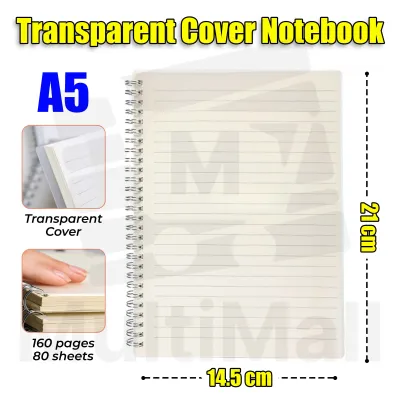
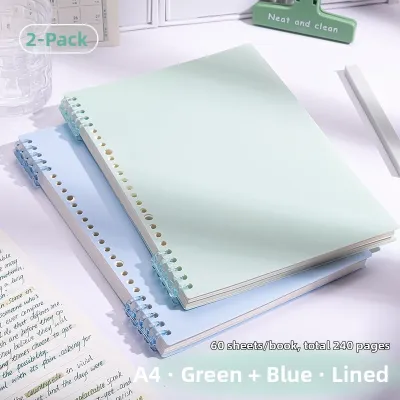
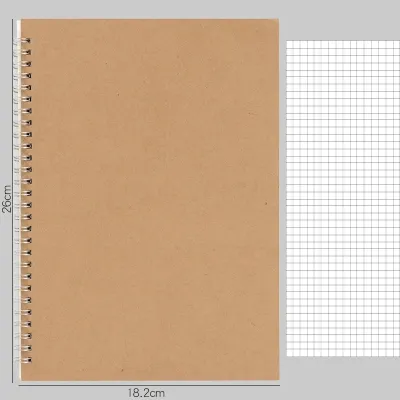
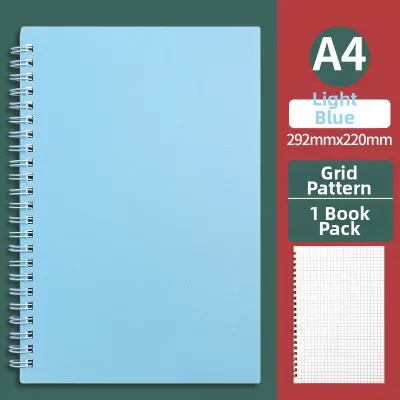
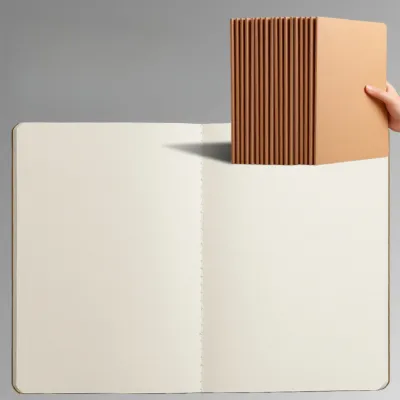
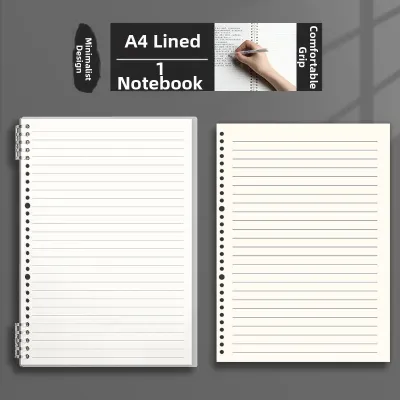
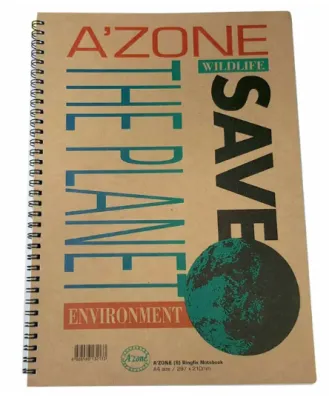
Prices are valid at publication and may change. Please refer to the product page for the latest price.
When evaluating paper performance, it is important to distinguish between bleed-through and show-through. Bleed-through occurs when ink penetrates completely through the fibers to the other side of the page, making the reverse side unusable. Show-through, or opacity, refers to how visible the writing on the front is from the back, which is largely determined by the thickness and density of the paper rather than its surface treatment. High opacity is essential if you plan to write on both sides of the page.
How to Evaluate Smoothness and Bleed-Through Across Brands
When browsing options in local stationery shops or online marketplaces, start by checking the product packaging or specifications for the GSM rating. Standard utility notebooks often use 70 GSM to 80 GSM paper, which is lightweight and functional for basic note-taking. Premium options designed for heavy ink usage typically feature 90 GSM to 120 GSM paper, offering a more substantial feel and better opacity. Knowing these numbers helps you filter out notebooks that are too thin for your intended use.

To evaluate smoothness before purchasing, look closely at the paper’s surface texture, often referred to as its “tooth.” Highly smooth paper feels slick to the touch and allows pens to glide effortlessly, which is well-suited for fine-tip gel pens or fountain pens. Conversely, paper with a slight texture or tooth provides a satisfying resistance that helps control ballpoint pens and graphite pencils. You can often feel this difference by gently rubbing a page between your fingertips if a display model is available.
Evaluating bleed-through resistance requires looking for specific indicators on the packaging, such as “ink-proof,” “fountain pen friendly,” or “high-opacity” labels. However, because these terms are not standardized across manufacturers, they should be treated as general guides rather than absolute guarantees. The actual performance will always depend on the specific chemical interaction between your pen’s ink and the paper’s sizing, as well as environmental factors like humidity.
Because visual inspections have limits, the most reliable way to confirm paper quality is through physical swatch testing. If you are purchasing a single notebook to test, use your wettest pens on a back page to observe how the ink behaves. Watch for feathering along the edges of your lines and check the reverse side of the sheet once the ink has fully dried to assess both bleed-through and long-term show-through.
Matching A4 Paper Specifications to Your Pens and Printers
Fountain pens and wet ink markers require robust paper with high GSM and heavy surface sizing to perform well. Without adequate sizing, the liquid ink will spread rapidly through the paper fibers, causing fuzzy lines and significant bleed-through. For these tools, look for notebooks featuring 90 GSM to 100 GSM paper that explicitly states it is coated or sized for wet inks. This ensures that the ink pools slightly on top of the page, preserving the true color and shading of the ink.
Gel pens and rollerballs release a moderate amount of water-based or gel ink, requiring a balance between absorption and smoothness. If the paper is too smooth and heavily sized, the ink may pool on the surface and smudge easily under your hand, especially if you write quickly. A medium-weight paper of 80 GSM to 90 GSM with moderate sizing offers a practical compromise, allowing the ink to dry reasonably fast while maintaining clean lines. This is particularly important for left-handed writers who risk dragging their hand across fresh ink.
Ballpoint pens and graphite pencils perform exceptionally well on standard-weight paper with a slight texture. The wax or oil-based ink of a ballpoint, as well as the graphite of a pencil, needs a certain amount of friction to transfer effectively from the tip to the page. Standard 70 GSM to 80 GSM paper provides this necessary grip, preventing the pen from slipping and ensuring consistent line delivery without requiring excessive writing pressure.
If you plan to tear out sheets to feed through an inkjet or laser printer, you must verify the printer’s paper thickness compatibility. Standard office printers are calibrated for 80 GSM paper; feeding excessively thick or stiff sheets from a heavy-duty notebook can lead to paper jams or poor toner adhesion. Always check your printer’s manual to ensure it can handle specialized notebook paper weights before attempting to print, as some high-GSM papers can cause feed rollers to slip.
Decision Framework: Choosing the Right A4 Notebook for Your Needs
To simplify your selection process, align your primary writing tools with the corresponding paper specifications. If your daily routine involves fountain pens, heavy markers, or double-sided writing where show-through must be minimized, prioritize notebooks with heavily sized paper rated at 90 GSM or above. This ensures your lines remain crisp and both sides of every sheet remain fully usable, maximizing the value of your notebook.
For general office tasks, lecture notes, or draft work using standard ballpoint pens and pencils, a standard 70 GSM to 80 GSM notebook with a slight tooth is the most practical and cost-effective choice. These notebooks are lighter to carry around, fit easily into standard bags, and offer the necessary friction for comfortable, rapid writing. They are also widely available and highly compatible with standard filing systems.
If you prefer gel pens and need to write quickly without smudging your work, seek out specialized quick-dry or lightly coated paper options. These papers are engineered to absorb the liquid carrier of gel inks rapidly while keeping the pigment sharp on the surface. This prevents smearing during fast-paced meetings or lectures.
Finally, always check the notebook’s binding style before making your final decision. A notebook that cannot lay completely flat makes it difficult to write near the inner margin, reducing the usable surface area of your A4 pages. Look for thread-bound, wire-bound, or specialized flat-lay bindings to maximize your writing comfort and efficiency, ensuring you can use the entire width of the A4 sheet.
Frequently Asked Questions (FAQ)
Does a higher GSM always mean better paper quality?
No, a higher GSM simply indicates that the paper is heavier and thicker, which naturally improves opacity and reduces show-through. It does not automatically mean the paper is of higher quality or suitable for every writing instrument. For instance, a heavy 100 GSM paper without proper surface sizing can still suffer from severe ink feathering when used with a fountain pen. Additionally, excessively thick paper adds unnecessary weight to your bag and can cause feeding issues if run through standard office printers. The overall quality depends on the combination of paper weight, fiber quality, and surface treatments.
How can I test a notebook's paper quality before buying in bulk?
The most reliable method is to purchase a single unit of the notebook to conduct a hands-on swatch test before committing to a bulk order. Use the exact pens, pencils, or markers you plan to use daily, writing several lines with varying pressure and speed. Allow the ink to dry completely, as some surface-sized papers require more time to set. Once dry, inspect the lines for any feathering or spreading, and turn the page over to evaluate the level of bleed-through and show-through. This practical test ensures the paper matches your specific writing style and tools under real-world conditions.
Community discussion
Share your experience or ask a question. Comments are reviewed before publication.