
Selecting the right pallet stretch film brand in Singapore requires looking past basic marketing claims and focusing on measurable polymer performance. For local warehouse managers, the best brand is not simply the cheapest per roll, but the one that consistently delivers optimal load containment, minimal film breakage, and predictable yield. Prominent regional brands and specialized local distributors—such as Syspex (known for Grip Film), Stream Peak, and Packman—supply a variety of formulations designed to secure cargo through Singapore’s humid tropical climate and international transit routes.
To make an informed procurement decision, you must evaluate the underlying material science, match the film specifications to your specific load profiles, and partner with suppliers capable of providing technical support and consistent stock. This guide outlines the objective criteria for evaluating stretch film brands, balancing operational efficiency with cost-effectiveness in your warehouse.
Core Criteria for Evaluating Stretch Film Brands
The foundational element of any high-quality pallet stretch film is the base resin formulation. Most modern stretch films are manufactured using linear low-density polyethylene (LLDPE). However, the specific type of LLDPE copolymer used—such as butene (C4), hexene (C6), octene (C8), or metallocene (mLLDPE)—significantly influences the film’s physical properties. Metallocene and octene-based films generally offer superior tensile strength, puncture resistance, and elastic recovery compared to standard butene-based films. When evaluating brands, ask suppliers for the exact resin composition to understand how the film will perform under high-tension wrapping.
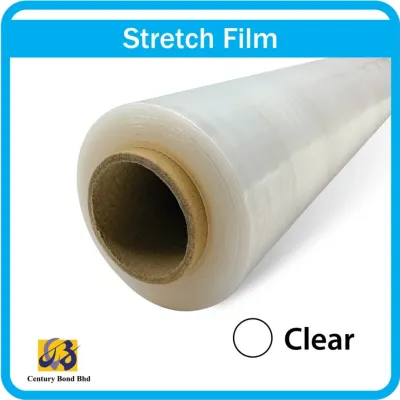
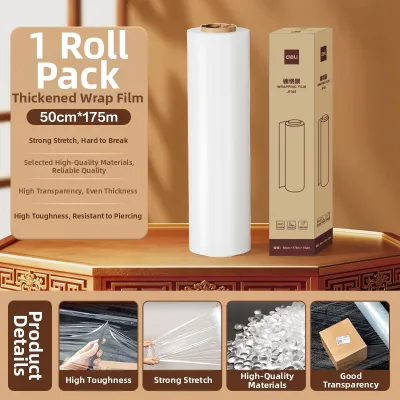
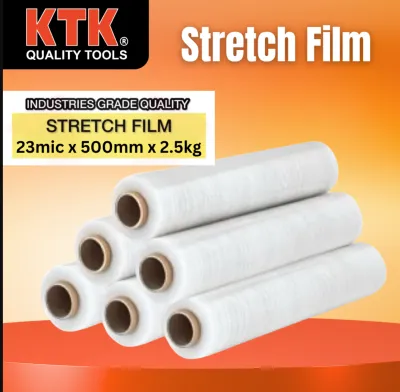
Products mentioned in this guide
![🏅[CHEAPEST] Stretch Film/ Shrink Wrap / Cling Wrap /Pallet wrapping /Moving Supplies/pallet Wrap/Pallet wrapping](https://img.lazcdn.com/g/p/c69357eb04f4e35ac9ee2d124f108fda.jpg_400x400q80.jpg_.webp)
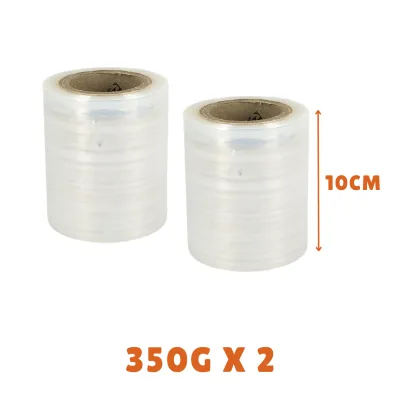
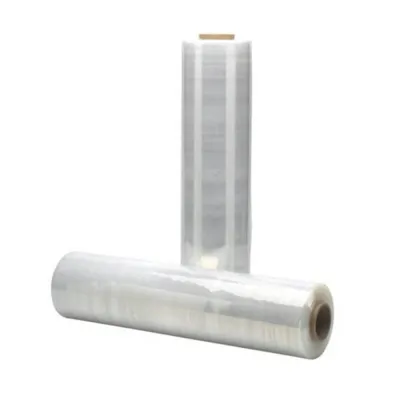
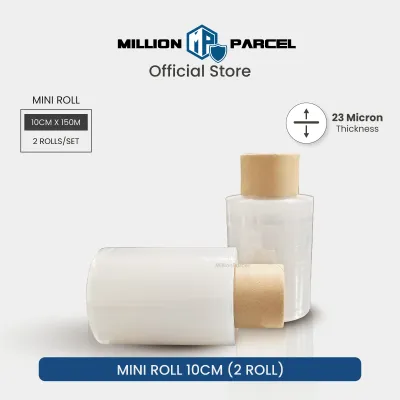
Prices are valid at publication and may change. Please refer to the product page for the latest price.
Clarity, stretch memory, and tear resistance are direct results of these resin formulations. High-clarity films allow barcode scanners to read labels easily through multiple layers of wrap, which is essential for automated sorting systems in modern logistics hubs. Stretch memory, or the film’s ability to return to its original state after being stretched, provides the continuous compressive force needed to hold a pallet load tight. If a brand uses sub-par recycled resins or poor formulations, the film may suffer from creep, where it stretches out during transit and fails to maintain load containment.
Gauge consistency is another critical indicator of a brand’s manufacturing quality control. A film with a nominal thickness of 20 microns should maintain that thickness across the entire length of the roll. If a brand’s manufacturing process allows the gauge to fluctuate down to 15 microns in sections, these thin spots become weak points. Under the tension of manual or machine wrapping, the film will snap at these weak points, causing immediate downtime, operator frustration, and wasted material.
To verify a brand’s quality standards, you should request and review their Technical Data Sheets (TDS) rather than relying on unverified sales pitches. A reliable manufacturer will provide specific metrics, including ultimate tensile strength (measured in megapascals), elongation at break (expressed as a percentage), Dart drop impact resistance (measured in grams), and Elmendorf tear strength. Comparing these technical specifications across different brands allows you to establish an objective baseline of material strength and consistency before committing to a bulk purchase.
Matching Film Specifications to Your Warehouse Operations
No single pallet stretch film is universally suitable for every warehouse application. Your choice must align with your specific pallet load profiles, which are typically classified into three distinct categories based on their shape and vulnerability. Type A loads are uniform, flat-sided, and have no sharp protrusions, making them relatively easy to wrap with standard films. Type B loads are less uniform, featuring some irregular shapes or recessed areas that require moderate puncture resistance. Type C loads are highly irregular, containing sharp corners, protruding items, or mixed packaging materials that demand maximum puncture and tear resistance.

Understanding these load types helps you determine the necessary puncture resistance and cling properties of the film. Puncture resistance prevents sharp pallet corners or wooden splinters from tearing the film during transit, which could lead to catastrophic load failure. Cling properties, on the other hand, ensure that the film sticks securely to itself without leaving a sticky residue on the packaged goods. High-quality brands offer controlled cling, meaning the film is smooth on the outside to prevent adjacent pallets from sticking together and tearing during container loading, while remaining highly adhesive on the inside layer.
Hand Stretch Film vs. Machine Stretch Film
Hand stretch film is designed for manual application and typically features shorter roll lengths (300 to 500 meters) and lighter core weights to reduce physical strain on warehouse operators. These films are applied using manual dispensers, requiring the operator to walk backward around the pallet while pulling the film to create tension. Because human physical strength is limited, hand films rarely achieve their maximum potential stretch, often resulting in lower material yield and higher cost per pallet compared to automated processes.
In contrast, machine stretch film is engineered for use with semi-automatic or fully automatic turntable, rotary arm, or orbital wrapping machines. These rolls are much larger and heavier, often weighing 15 to 17 kilograms, with lengths extending up to 1,500 meters or more. Machine films are designed to withstand the high-speed, high-tension environments of motorized pre-stretch carriages, which mechanically pre-stretch the film up to 250% or 300% before it is applied to the load.
The operational threshold for transitioning from manual hand wrapping to machine wrapping generally depends on your daily pallet throughput and labor costs. If your warehouse wraps fewer than 10 to 15 pallets per day, hand wrapping remains a flexible and low-capital option. However, once your volume exceeds 15 to 20 pallets daily, the consistency, speed, and material savings of a machine wrapper easily justify the capital investment. Machine wrapping reduces film consumption by maximizing the stretch yield, while ensuring that every pallet is wrapped with identical tension and containment force.
Standard, Pre-Stretched, and Specialty Films
Standard cast and blown stretch films require significant physical effort to stretch during manual application. To address this, many modern warehouses utilize pre-stretched films. These films are mechanically stretched near their breaking point during the manufacturing process before being wound onto the roll. Because the film is already stretched, the operator does not need to exert heavy physical force to achieve proper tension during application. This drastically reduces worker fatigue, lowers the risk of musculoskeletal injuries, and ensures consistent load containment regardless of the operator’s physical strength.
Pre-stretched films also offer substantial material-saving benefits. Because the film is thinner (often between 6 to 10 microns) yet highly rigid, it uses up to 50% less plastic by weight to secure the same pallet load compared to traditional standard films. This reduction in material volume directly translates to lower packaging waste, helping Singaporean businesses meet local environmental sustainability goals and reduce disposal fees.
Specialty films are required when standard transparent films cannot meet specific environmental or security needs. Opaque stretch films, available in black or white, are commonly used to conceal high-value goods from view, providing an effective deterrent against pilferage and tampering during transit. These opaque films also protect light-sensitive products from direct exposure to solar radiation.
For agricultural products, fresh produce, or hot-filled industrial goods, vented or macro-perforated stretch films are essential. These films feature engineered holes or mesh-like structures that allow air to circulate freely through the pallet. This ventilation prevents condensation from building up inside the wrap, which could otherwise cause cardboard boxes to soften, metal cans to rust, or perishable food items to spoil during storage and transport.
Sourcing and Supplier Evaluation in Singapore
When sourcing pallet stretch film in Singapore, you will encounter three primary types of suppliers: direct manufacturers, industrial packaging distributors, and specialized B2B packaging suppliers. Direct manufacturers, often operating large-scale extrusion facilities in neighboring Malaysia or Indonesia, offer the lowest unit pricing but typically require high minimum order quantities (MOQs) and longer lead times. Industrial packaging distributors and specialized local B2B suppliers, such as Syspex or Stream Peak, maintain local warehousing in Singapore, allowing them to offer flexible order volumes, rapid delivery, and customized stocking programs.
Evaluating local suppliers requires assessing several operational capabilities beyond the initial price quote. Reliable lead times are paramount; a delay in stretch film delivery can halt warehouse shipping operations entirely. Ensure your supplier has robust local warehousing capabilities to buffer against regional supply chain disruptions. Ask about their minimum order quantities and whether they offer just-in-time delivery agreements to help you minimize on-site inventory storage costs.
Furthermore, access to local technical support is invaluable. Leading Singaporean distributors can send packaging engineers to your facility to conduct film audits, optimize your machine wrapper settings, and recommend the precise film thickness and wrap pattern for your specific loads. This technical service often yields far greater long-term cost savings than a minor discount on the roll price.
Before signing a long-term supply contract, always request product samples and conduct a formal initial supplier audit. Use the samples to run real-world trials on your warehouse floor, observing how the film behaves under your typical wrapping conditions. A reputable supplier should readily provide sample rolls and accompany them with comprehensive technical datasheets and compliance certifications, such as RoHS or REACH declarations, ensuring the film meets all local and international safety standards.
Step-by-Step Brand Validation and Cost Analysis
To validate a new stretch film brand, you must move away from laboratory datasheets and conduct in-house load containment and puncture tests using your actual, most challenging pallet configurations. Set up a test pallet containing your heaviest, most irregular, or sharpest items. Wrap the pallet using your standard procedure, then perform a manual containment force test using a specialized containment force gauge. This tool measures the force (in kilograms or pounds) exerted by the film against the load, ensuring it meets the minimum threshold required to prevent shifting during transit.
Next, conduct a puncture test by deliberately pushing a blunt object against the wrapped film to observe how it resists tearing and whether a puncture propagates into a catastrophic run. If a small puncture causes the entire wrap to split open, the film lacks the necessary tear propagation resistance required for warehouse operations.
Calculating the true cost of a stretch film roll requires a data-driven formula rather than a simple comparison of the price per roll. Many low-cost brands reduce their prices by using heavier cardboard cores or shorter roll lengths, meaning you pay for cardboard instead of usable plastic. To find the true cost per pallet, use the following systematic approach:
- Step 1: Weigh the unused roll. Weigh an unused roll of stretch film on a precision scale to find the gross weight.
- Step 2: Wrap a test pallet. Completely wrap a test pallet using your standard wrapping pattern.
- Step 3: Weigh the consumed film. Cut the applied film off the pallet, roll it into a ball, and weigh it to determine the exact weight of the film consumed (net film weight per pallet).
- Step 4: Weigh the empty core. Weigh the empty cardboard core after the roll is completely finished.
Using these measurements, calculate the net weight of the plastic on a full roll:
$$\text{Net Plastic Weight} = \text{Gross Roll Weight} – \text{Core Weight}$$\n Then, determine how many pallets you can wrap per roll:
$$\text{Pallets Per Roll} = \frac{\text{Net Plastic Weight}}{\text{Net Film Weight Per Pallet}}$$\n Finally, calculate the true cost per wrapped pallet:
$$\text{True Cost Per Pallet} = \frac{\text{Price Per Roll}}{\text{Pallets Per Roll}}$$\n This formula reveals the actual economic value of the film. A high-performance, higher-priced film that can be stretched further and applied thinner will often result in a significantly lower cost per pallet than a cheap, thick film that breaks frequently or cannot stretch.
To maintain these cost savings, establish a long-term performance monitoring checklist for your warehouse team. Instruct operators to track daily film breakage rates, noting how often the film snaps during application. Monitor the integrity of wrapped pallets stored in your warehouse over several weeks to check for relaxation or film tail unraveling. Finally, gather feedback from your delivery drivers or customers regarding load stability upon arrival, ensuring the chosen brand consistently delivers on its containment promise.
Frequently Asked Questions (FAQ)
How do I calculate the true cost of a stretch film roll?
To calculate the true cost, do not rely solely on the purchase price per roll. Weigh a new roll to get the gross weight, then subtract the weight of the empty cardboard core to find the net plastic weight. Wrap a standard pallet, cut the film off, and weigh it to determine the exact plastic weight used per pallet. Divide the net plastic weight of the roll by the weight used per pallet to find the total pallets wrapped per roll. Finally, divide the roll price by this number to get the true cost per pallet.
What is the difference between cast and blown stretch film?
Cast stretch film is manufactured by extruding molten polymer through a flat die onto cooled rollers. This process produces a highly transparent, glossy film that unwinds quietly and offers excellent cling, making it ideal for general warehouse use. Blown stretch film is made by blowing molten polymer into a vertical bubble that is air-cooled. Blown film is significantly louder when unwinding and has a duller appearance, but it provides superior puncture resistance, higher tensile strength, and greater holding force, making it highly suitable for heavy, sharp, or irregular loads.
Can I use hand stretch film on a machine wrapper?
No, you should not use hand stretch film on an automated or semi-automated machine wrapper. Hand films are thinner, have shorter roll lengths, and are designed for low-tension manual application. Machine wrappers operate at much higher speeds and apply mechanical tension that pre-stretches the film up to 300%. Attempting to use hand film on a machine wrapper will result in immediate and frequent film breakage, leading to equipment downtime, wasted material, and potential damage to the machine’s tension carriage.
Community discussion
Share your experience or ask a question. Comments are reviewed before publication.