
Preparing a child for the Singapore primary school journey involves managing a vast array of books, stationery, and personal gear. The most effective way to prevent lost property and keep daily schedules organized is by selecting the right types of stickers tailored to your child’s specific grade level. For lower primary students (Primary 1 to 3), highly durable, waterproof name labels and motivational tracking stickers are essential for building independence and securing belongings. As students transition to upper primary (Primary 4 to 6), their needs shift toward functional organization, requiring planner stickers, index tabs, and creative journaling labels to manage increased academic workloads and co-curricular activities (CCA).
Essential Stickers for Lower Primary (Primary 1 to 3)
Primary 1 to 3 marks a period of major transition where young children learn to manage their own belongings in a bustling school environment. During recess in the school canteen or during physical education (PE) lessons, items like water bottles, lunchboxes, food containers, and pencil cases frequently go astray. To ensure these items return home, parents require high-performance waterproof name labels. When evaluating these labels, look for synthetic materials such as vinyl or polyethylene terephthalate (PET) rather than standard paper. These materials resist water, friction, and mild dishwashing detergents, ensuring the printed name remains legible throughout the school year.
Adhesion strength is critical for items that undergo daily wear and frequent washing. For curved surfaces like water bottles or thin items like cutlery handles, choose labels with rounded corners, as sharp corners tend to catch on fabrics and peel away prematurely. Before applying the sticker, ensure the surface is completely clean, dry, and free of oily residues. Press the label firmly from the center outward to eliminate air bubbles, and allow the adhesive to cure for at least 24 hours before exposing the item to water.
Products mentioned in this guide
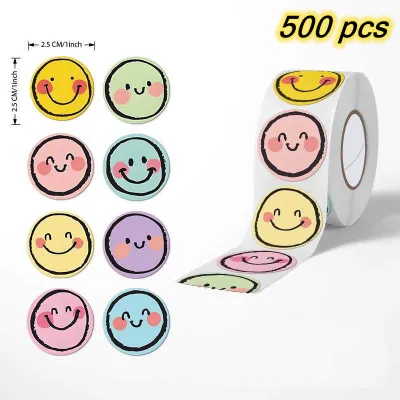
Prices are valid at publication and may change. Please refer to the product page for the latest price.
Beyond identification, stickers serve as excellent motivational tools for younger students. Reward stickers and behavioral tracking charts help children establish positive routines, such as packing their school bags the night before, completing homework independently, or keeping their study desks tidy. When selecting reward stickers, look for bright, engaging designs with positive reinforcement phrases. These can be applied directly to chore charts at home or used by parents to mark completed spelling lists and practice papers, reinforcing positive habits through visual feedback.
Functional and Aesthetic Stickers for Upper Primary (Primary 4 to 6)
As students enter Primary 4 to 6, their academic responsibilities expand significantly with preparation for school-based assessments and the Primary School Leaving Examination (PSLE). With this academic shift comes the introduction of CCAs, remedial classes, and supplementary lessons. To manage this demanding schedule, older students benefit greatly from planner and calendar stickers. These functional stickers allow students to color-code their weekly schedules, highlight exam dates, mark project deadlines, and track CCA practices, transforming a standard school diary into an active time-management tool.

Textbook navigation also becomes more complex in upper primary, where students must reference multiple chapters, science practical guides, and mathematical formula sheets. Functional index tabs and page markers are invaluable for this purpose. Unlike permanent stickers, these tabs should feature a semi-permanent or repositionable adhesive, allowing students to move them as they progress through the syllabus. When choosing index tabs, verify that the material is writable with standard ballpoint pens or fine-liners, and check that the ink dries quickly without smudging on the tab surface.
In addition to functional organization, upper primary students often use stickers as a medium for personal expression and stress relief. Aesthetic journaling stickers, decorative borders, and creative themes are widely used in personal diaries, creative writing notebooks, and school project presentations. Allowing students to personalize their notebooks with these stickers fosters a sense of ownership over their learning materials. For these creative projects, paper-based matte stickers or washi-tape style stickers are ideal, as they lay flat on notebook pages without adding excessive bulk to the binding.
Material, Durability, and Safety Checks
Before purchasing any stickers for school use, it is essential to evaluate their material composition and safety standards. Because stickers on lunchboxes and water bottles come into close proximity with food, parents should check product descriptions for non-toxic material declarations. Look for labels certified as acid-free, lead-free, and BPA-free. This is particularly important for younger children who may still have a habit of touching their stickers and then placing their hands near their mouths.
Understanding the difference between adhesive types prevents unnecessary damage to school property and personal items. Permanent adhesives are designed to stay put for years and are ideal for personal name labels on plastic, metal, or glass containers. However, they should never be applied directly to school-owned library books, rented textbooks, or surfaces that will eventually need to be returned in pristine condition. For these temporary applications, always opt for removable or low-tack adhesives that can be peeled away without tearing the underlying paper.
To protect expensive textbooks and personal gear, always perform a small, hidden test before applying any new sticker brand. Apply a small piece of the sticker to an inconspicuous area, such as the inside back cover of a textbook or the underside of a pencil case. Leave it in place for 24 hours, then gently peel it off to check for residue-free removal. If the sticker leaves a sticky film or lifts the paper fibers, it is unsuitable for temporary use and should only be applied to permanent, non-porous surfaces.
Building Your Back-to-School Sticker Shopping List
Consolidating your back-to-school sticker purchases into an organized plan saves both time and money. Start by structuring your shopping list based on your child’s grade level and the specific items that require labeling or organization. For a lower primary student, prioritize a set of medium-sized waterproof name labels for bottles and lunchboxes, a sheet of micro-sized name labels for individual color pencils, and a pack of motivational reward stickers. For an upper primary student, focus on index tabs, planner stickers, and a few sheets of aesthetic journaling stickers.
When budgeting, compare the cost-effectiveness of bulk generic sticker packs versus customized, pre-printed name sheets. Customized name sheets, which typically cost between S$5 and S$15 per set depending on the sheet count and design, offer the convenience of pre-printed names and high-durability laminates. These are highly efficient for busy parents. On the other hand, blank write-on sticker sheets are much cheaper, often costing under S$3 for a large pack, but they require you to write each name manually using a permanent marker. If choosing write-on labels, always verify that the surface material is compatible with your marker ink to prevent smudging.
Finding these supplies in Singapore is straightforward if you know where to look. Local brick-and-mortar stationery shops offer the advantage of physical inspection, allowing you to feel the thickness of the sticker sheets and check the adhesive backing before buying. For highly customized name labels, brand official stores and specialized online marketplaces provide digital design previews where you can select fonts, icons, and layouts. When ordering online, plan your purchases at least two to three weeks before the school term begins to allow ample time for printing and local delivery.
Frequently Asked Questions (FAQ)
How do I remove sticky residue from school textbooks without damaging the pages?
If the textbook cover is glossy or laminated, you can gently rub the residue with a clean, dry finger to roll the adhesive into small balls for easy removal. For matte paper covers, avoid using liquid adhesive removers or oils, as these will stain the paper permanently. Instead, use a piece of low-tack masking tape, pressing it gently over the residue and lifting it repeatedly. If you notice the paper fibers starting to lift or tear, stop immediately to prevent permanent damage to the book cover.
Can I use standard paper stickers as waterproof name labels?
Standard paper stickers are highly vulnerable to moisture and should not be used on items that require regular washing. When exposed to water, paper stickers absorb moisture, causing the paper fibers to disintegrate and the adhesive to fail. Furthermore, standard pen inks used on paper labels will smudge and run when wet. For water bottles, lunchboxes, and food containers, always verify that the label is made of vinyl, synthetic polyester, or has a protective waterproof laminate coating.
Community discussion
Share your experience or ask a question. Comments are reviewed before publication.