
Selecting the most suitable 3M whiteboard for your child depends on matching their developmental stage, physical reach, and academic workload with the correct format. For primary school students, smaller, portable lap boards or low-mounted easel pads support early motor skills and tactile learning. For secondary school students, expansive wall-mounted boards or adhesive whiteboard films accommodate complex multi-step equations, detailed diagrams, and long-term study schedules.
By aligning the whiteboard’s physical dimensions and surface type with specific grade-level tasks, you create an active learning station at home. This guide outlines how to evaluate different 3M formats, choose the ideal size for your child’s study habits, and verify installation requirements before making a purchase.
Understanding 3M Whiteboard Formats for Students
Whiteboards are no longer restricted to traditional classroom walls. Today, they come in several distinct formats designed to fit different study environments, room sizes, and learning styles. Understanding these formats is the first step in choosing the right tool for your child’s home study setup.
Products mentioned in this guide
Prices are valid at publication and may change. Please refer to the product page for the latest price.
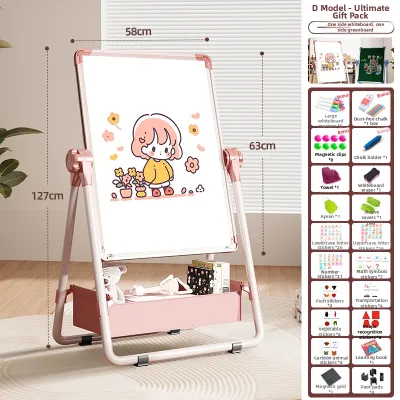
Easel pads and tabletop flip charts offer a highly interactive, kinetic learning experience. These formats typically feature large sheets of paper or dry-erase surfaces mounted on a lightweight, adjustable stand. They are excellent for active study sessions where a student needs to stand up, move around, or collaborate with siblings or tutors. The physical act of flipping pages or writing on an angled surface can help younger students stay engaged during spelling drills or basic math practice.
Desktop and lap boards represent the most portable and space-efficient option. These compact, double-sided boards are designed to sit directly on a student’s desk or be held comfortably in their lap. They are ideal for quick calculations, drafting rough outlines, or practicing handwriting without wasting paper. Because they require minimal storage space, they are highly suited for smaller study desks or shared living areas where a permanent wall installation is not feasible.
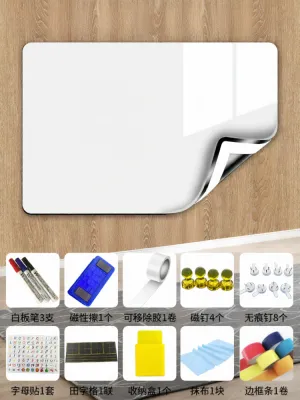
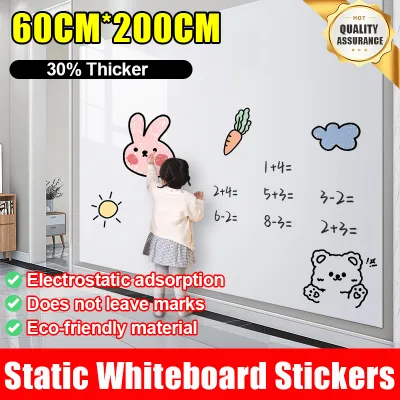
Wall-mounted boards and adhesive whiteboard films provide a dedicated, permanent zone for extensive note-taking and long-term planning. Traditional wall-mounted boards offer a rigid, durable writing surface that can handle daily use over several years. Alternatively, adhesive whiteboard films can be applied directly to existing walls, doors, or smooth desk surfaces, transforming underutilized spaces into expansive writing areas. These options are highly suitable for older students who need to visualize large amounts of information simultaneously.
When choosing between these formats, you must weigh the trade-offs between portability, available wall space, and the total usable writing area. A portable lap board offers convenience but limits the complexity of the work your child can display. Conversely, a large wall film provides unlimited space for complex diagrams but requires a dedicated, smooth wall surface and a permanent location. Balancing these factors ensures the board supports your child’s daily study habits without cluttering your home.
Selecting the Right Size and Format for Primary School
Primary school is a period of rapid physical growth and foundational skill development. The whiteboard you select must accommodate your child’s developing motor skills, physical reach, and changing academic needs from lower primary through upper primary.

In lower primary (typically ages seven to nine), children are mastering basic literacy, phonics, and simple numeracy. At this stage, large, complex boards can be overwhelming and physically difficult to navigate. Instead, focus on smaller, desk-friendly lap boards or low-mounted tabletop easels. These compact formats allow young learners to practice letter formation and basic addition within their natural field of vision and physical reach. Writing on a smaller surface helps them develop fine motor control without straining their arms or shoulders.
As children transition into upper primary (typically ages ten to twelve), their academic tasks become more structured. They begin working on multi-step word problems, mind mapping for composition writing, and tracking weekly homework assignments. A medium-sized easel pad or a moderately sized wall-mounted board is ideal for this stage. These formats offer enough space to map out ideas visually while remaining small enough for the child to reach every corner comfortably.
Ergonomic checks are critical when setting up a whiteboard for primary school students. If you choose a wall-mounted board or an adhesive film, ensure the mounting height matches your child’s physical reach. The center of the board should align with their chest level when standing, allowing them to write comfortably from top to bottom without bending over or stretching excessively. Proper height alignment prevents physical strain and encourages a healthy, active posture during study sessions.
Safety and stability must also be verified, especially with freestanding or portable options. If you opt for a freestanding easel, check that it features a stable, weighted base or secure locking legs to prevent tipping during active use. Younger children often lean on surfaces while writing, so the structure must be robust enough to withstand downward pressure. For wall-mounted options, ensure all mounting brackets or adhesive strips are rated for the board’s weight to keep the study environment completely safe.
Selecting the Right Size and Format for Secondary School
Secondary school students face a significant increase in academic complexity, requiring tools that can handle advanced problem-solving, extensive note-taking, and long-term exam preparation. The simple, compact boards used in primary school are often insufficient for the demanding curriculum of older students.
For secondary school subjects like advanced mathematics, chemistry, and physics, students frequently work through lengthy, multi-step equations and detailed structural diagrams. A large wall-mounted board or a wide-format adhesive whiteboard film is highly beneficial here. These expansive surfaces allow students to lay out an entire problem from start to finish without having to erase intermediate steps. Seeing the entire logical flow of a physics problem or a history essay outline at a single glance aids cognitive processing and retention.
Portable easel pads also serve a unique purpose for secondary students, particularly for collaborative group projects and peer tutoring. If your child frequently studies with classmates or works with a home tutor, a portable easel can be moved easily to a dining table or a shared living space. This flexibility allows multiple students to contribute to a brainstorming session or review study notes together without crowding around a single small desk.
Managing space is a common challenge when introducing a large writing surface into a teenager’s bedroom or a shared study area. If wall space is limited, look for vertical configurations or consider applying adhesive whiteboard films to the back of a bedroom door or the side of a wardrobe. This creative use of space provides a substantial writing area without sacrificing valuable floor space or requiring heavy mounting hardware.
Surface durability becomes a primary consideration as study sessions become more frequent and intense. Secondary students use their whiteboards daily, often leaving notes or study schedules on the board for weeks at a time. To prevent ghosting—the faint, permanent staining left behind by dry-erase markers—verify that the board’s surface material is rated for high-frequency use and easy erasing. High-quality polymer or coated surfaces resist ink penetration, ensuring the board remains clean and readable throughout the academic year.
Essential Checks Before Purchasing Your 3M Whiteboard
Before finalizing your purchase, performing a few practical checks will ensure the whiteboard integrates smoothly into your home and functions as expected. Taking the time to verify these details prevents installation issues and ensures compatibility with your existing stationery supplies.
First, verify the surface material specifications provided by the manufacturer. Different whiteboard models use different surface coatings, which directly affect stain resistance and marker compatibility. Ensure the product description explicitly states compatibility with standard dry-erase markers. If your child plans to use water-based markers or liquid chalk, check if the surface is non-porous enough to handle these mediums without permanent staining.
Next, carefully review the installation requirements for wall-mounted options. Traditional framed boards can be surprisingly heavy and require secure mounting hardware. Check the weight of the board and verify whether your home’s wall type—such as drywall, concrete, or brick—can support the necessary anchors and screws. If you are renting or prefer not to drill holes, this check will help you decide if a lightweight adhesive film or a freestanding easel is a more practical alternative.
If you choose adhesive-backed boards or 3M whiteboard films, pay close attention to adhesive limitations and surface compatibility. These films require a smooth, clean, and non-textured surface to adhere properly. They may not bond well to textured plaster, raw wood, or highly textured wallpaper. Additionally, review the manufacturer’s removal instructions to ensure the adhesive can be peeled away cleanly in the future without damaging the underlying paint or drywall.
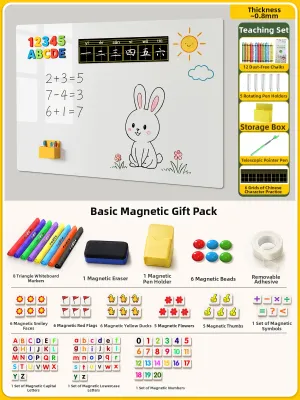
Finally, confirm accessory compatibility and package contents. Some whiteboards are sold as standalone panels, while others come as complete kits including marker trays, erasers, mounting brackets, or starter markers. Knowing exactly what is included in the box allows you to source any necessary accessories separately, ensuring your child has everything they need to start using their new study tool on day one.
Frequently Asked Questions (FAQ)
Can I use regular permanent markers on a 3M whiteboard and erase them?
Standard permanent markers are not designed for dry-erase surfaces because their ink contains solvents that bind permanently to the board’s coating. If a permanent marker is accidentally used, do not use abrasive scrubbers or harsh household solvents, as these can permanently ruin the whiteboard’s protective finish. Instead, a reliable, non-destructive method is to draw directly over the permanent ink lines with a fresh, high-quality dry-erase marker. The solvents in the dry-erase ink will temporarily re-liquefy the permanent pigment, allowing you to wipe both marks away cleanly with a standard microfiber cloth or eraser.
How do I prevent ghosting or staining on my whiteboard over time?
To maintain a pristine writing surface and prevent ghosting, establish a regular cleaning routine. Avoid leaving dry-erase ink on the board for months at a time, as the pigment can slowly penetrate the surface layer. For daily maintenance, use a clean, dry microfiber cloth or a dedicated whiteboard eraser. For deeper cleaning, check the manufacturer’s instructions for approved whiteboard cleaning sprays or wipes. Never use abrasive sponges, scouring powders, or harsh household chemicals like bleach or acetone, as these will strip away the smooth topcoat, making the board highly susceptible to permanent staining in the future.

Community discussion
Share your experience or ask a question. Comments are reviewed before publication.