
Quick Answer: Matching Paper to Your Preferred Pen
Choosing the right 2027 monthly planner depends entirely on your primary writing instrument, as fountain pens and gel pens interact with paper fibers in fundamentally opposite ways. There is no single, universally superior paper that excels equally for both pen types without some degree of compromise. To secure a seamless writing experience, you must match the physical properties of your preferred ink to the specific manufacturing characteristics of the planner’s paper.
Fountain pens utilize highly fluid, water-based inks that require tightly milled, densely packed paper fibers with specialized surface sizing. This prevents the liquid from spreading horizontally along the fibers or penetrating vertically through the sheet. Conversely, gel pens deploy a thicker, suspension-based pigment or dye ink that sits on top of the page. This ink requires a paper surface with moderate absorption and sufficient thickness to prevent smudging and facilitate reasonable dry times, particularly in humid tropical environments.
Before committing to a 2027 monthly planner, establish which writing tool you use most frequently. If your daily planning relies on the smooth glide of a fountain pen, prioritize planners featuring specialized, high-density, ultra-thin papers. If you depend on the precise, vibrant lines of gel pens and highlighters, look for planners built with thicker, moderately sized, mid-to-high GSM paper stocks. By understanding these material dynamics, you can select a planner that preserves your notes without feathering, bleeding, or smearing.
Products mentioned in this guide
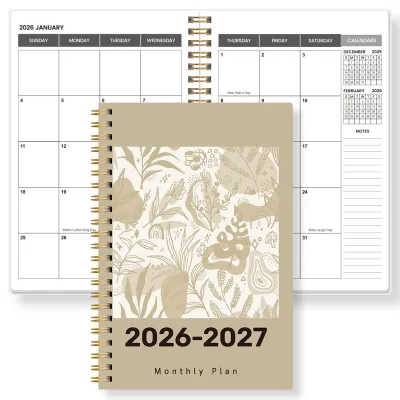
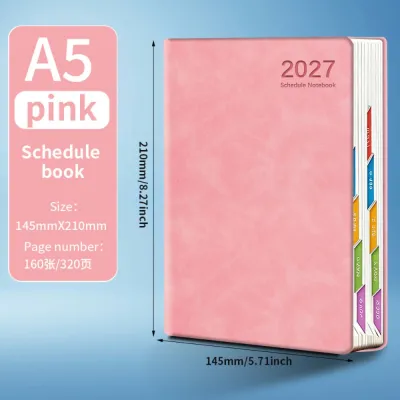
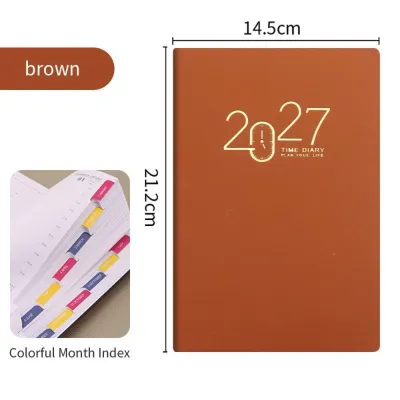
![[2 in 1] 2027 Vincent van Gogh Monthly Planner + Weekly Planner/Notebook - (A5 | 120 pages)|ROYCE PUBLISHING](https://img.lazcdn.com/g/p/167f5ca7dc71bb65dfe551a31e9f4650.jpg_400x400q80.jpg_.webp)
![[2 in 1] 2027 Monthly Planner + Weekly Planner/Notebook - (A5 | Singapore Holidays | 120 pages)|ROYCE PUBLISHING](https://img.lazcdn.com/g/p/70c55d086968b7b70fc25711c879f301.jpg_400x400q80.jpg_.webp)
![[2 in 1] 2027 Winnie-The-Pooh Classic Monthly Planner + Weekly Planner / Notebook-(A5 | 120 pages)|ROYCE PUBLISHING](https://img.lazcdn.com/g/p/e80990a67cd76a5aff09f199057fca0f.jpg_400x400q80.jpg_.webp)
Prices are valid at publication and may change. Please refer to the product page for the latest price.
How Paper Physics Differ for Fountain Pens vs Gel Pens
To understand why a planner paper performs beautifully with one pen but fails miserably with another, you must examine the physical and chemical interactions between ink and paper pulp. Fountain pen ink is primarily composed of water, colorants, and humectants. Because it is highly fluid, it relies on capillary action to flow from the pen’s reservoir, down the feed, and onto the page. If the paper fibers are loosely bound or lack protective chemical treatments, the paper acts like a paper towel, pulling the liquid ink outward to create fuzzy, distorted lines—a phenomenon known as feathering. It can also pull the ink entirely through the page, causing unsightly bleed-through that ruins the reverse side of your monthly layout.

Gel pen ink behaves quite differently due to its thixotropic properties. The ink exists as a thick, viscous gel inside the refill, but becomes temporary fluid under the shear stress of the rotating ballpoint tip as you write. Once deposited onto the paper, it quickly reverts to its gel-like state. Because gel ink contains suspended pigments or dyes in a water-soluble polymer base, it does not sink deeply into the paper fibers. Instead, it forms a distinct layer on the surface of the page. If the paper surface is too sealed or heavily coated, the gel ink cannot bond with the fibers, leaving it vulnerable to smearing long after you have finished writing.
These contrasting ink behaviors define the four key dimensions of paper quality you must evaluate:
- Absorbency: The rate at which paper fibers draw liquid away from the surface. High absorbency is excellent for quick gel pen drying but disastrous for fountain pens.
- Surface Sizing: Chemical agents, such as starch or alkyl ketene dimer, applied during papermaking to control liquid penetration. Heavy sizing protects against fountain pen feathering but increases gel pen smear risk.
- Dry Time: The time required for ink to transition from a wet state to a permanent, smudge-resistant mark. This is heavily influenced by ambient humidity.
- Show-Through (Ghosting): The visibility of writing on the reverse side of the page. While not a physical failure like bleed-through, high ghosting can make two-page monthly spreads difficult to read.
When these physical properties are not balanced, writing becomes a frustrating chore. A paper designed exclusively for fountain pens will often cause gel pens to smear with the slightest touch of a hand. Meanwhile, a highly absorbent paper designed for rapid gel pen drying will cause a medium-nib fountain pen to write two sizes wider than intended, leaving a trail of ink that bleeds through to the next month’s calendar grid.
Key Paper Specifications to Verify Before Buying
When shopping for a 2027 monthly planner, relying on generic marketing terms like “premium quality” or “ink-proof” is rarely sufficient. Instead, you need to analyze verifiable technical specifications and paper types. The most common metric provided by manufacturers is GSM, or Grams per Square Meter, which measures the weight and density of the paper. While it is tempting to assume that a higher GSM automatically translates to better ink resistance, this is a common misconception in the stationery world.
For fountain pens, the density of the paper fibers and the application of surface sizing are far more critical than raw thickness. For example, specialized Japanese papers weighing only 52 GSM can handle exceptionally wet fountain pen inks without a single trace of bleed-through, though they will exhibit noticeable ghosting. On the other hand, a standard 100 GSM sketchbook paper with loose, unsized fibers may feather and bleed immediately when exposed to a liquid ink. For gel pens, however, a higher GSM (typically between 80 and 120 GSM) is highly beneficial, as the physical thickness of the sheet prevents the heavy pigment layers from showing through to the opposite side.
Sizing and coating are the invisible factors that dictate how paper handles ink. Sizing can be internal, where chemical agents are mixed directly into the paper pulp, or external, where a tub-sizing or surface-coating process applies a protective barrier to the finished sheet. Heavily sized papers slow down ink absorption, which allows fountain pen inks to pool elegantly on the surface, showcasing unique properties like shading and metallic sheen. However, this same barrier prevents gel pen ink from drying quickly, making it prone to smearing under a hand or when closing the planner.
When reviewing 2027 monthly planner options, look for recognized premium paper benchmarks in the product descriptions. Papers such as Tomoe River (specifically the Sanzen formulation), Midori MD Paper, and Maruman Mnemosyne are widely celebrated for their exceptional fountain pen performance due to their unique fiber blends and precise sizing treatments. When evaluating these options, always verify the specific paper stock listed on the manufacturer’s official label or store listing for the 2027 edition, as brands occasionally update their paper sourcing between annual production runs.
Comparing Common Planner Paper Profiles
To simplify your search, you can categorize the paper found in most 2027 monthly planners into three distinct structural profiles. Each profile offers a unique balance of thickness, density, and surface treatment, making it naturally suited to specific writing instruments.
Ultra-Thin, High-Density Paper (52–68 GSM)
This profile represents the pinnacle of engineering for fountain pen enthusiasts who want a lightweight, compact planner. Often utilized in minimalist monthly layouts, this paper is highly compressed and heavily sized. It allows fountain pen ink to sit on the surface, preserving crisp lines, preventing feathering, and highlighting complex ink characteristics like shading and sheen.
However, this profile presents distinct challenges for gel pen users. Because the surface is highly resistant to liquid penetration, gel inks dry very slowly, especially in high-humidity environments like Singapore. If you close your planner too quickly, the wet gel ink will transfer to the facing page. Additionally, while this paper prevents physical bleed-through, its extreme thinness results in significant ghosting, meaning you will clearly see the outline of your writing on the reverse side.
Thicker, Coated or Heavily Sized Paper (90–120 GSM)
This profile is commonly found in structured, multi-functional monthly planners designed for heavy daily use. The substantial weight of the paper provides a satisfying, rigid feel and offers excellent resistance to ghosting, making it perfect for those who dislike seeing previous entries through the page.
For gel pens, fine-liners, and highlighters, this paper is an outstanding choice. The moderate absorption rate allows gel inks to dry rapidly, minimizing the risk of accidental smudges. For fountain pens, however, the performance of this profile is highly variable. If the paper is poorly milled or lacks adequate sizing, wet inks may pool unevenly, cause the nib to skip, or feather along the surface. It is a reliable, heavy-duty option, but it requires careful pairing if you intend to use liquid inks.
Standard Mid-Weight Paper (70–80 GSM)
This is the most common utility paper profile, utilized in mass-market and budget-friendly planners. It is designed as a general-purpose compromise to keep the planner affordable and moderately thin.
While this paper handles standard ballpoint pens and fine-tip gel pens (such as 0.38mm or 0.5mm sizes) reasonably well, it frequently struggles under demanding conditions. If you use a wet gel pen or a medium-to-broad fountain pen nib, this mid-weight stock is highly susceptible to both feathering and bleed-through. It represents a functional baseline, but it lacks the specialized characteristics required for a premium writing experience with liquid or heavy gel inks.
To set realistic expectations before purchasing, cross-reference the planner’s product specifications with these three profiles. If a 2027 planner does not explicitly state its paper weight or origin, it is highly likely to feature standard mid-weight utility paper, which may require you to adjust your pen and ink choices accordingly.
Practical Testing Methods Before You Commit
Rather than risking a full year of planning on an incompatible paper, you should perform safe, controlled tests on your paper before committing to a final purchase. In Singapore, many specialty stationery boutiques and paper merchants maintain sample planners or paper swatches specifically for customers to evaluate. If you are unable to access a physical sample in-store, look for planners that include blank memo pages at the back, which serve as the perfect testing ground before you write on your main monthly calendar grids.
To conduct a thorough paper evaluation, follow this structured “swatch test” protocol using your preferred writing instruments:
- The Line Test: Draw a series of continuous, straight lines across the page. Observe whether the ink flows smoothly or if it pools, skips, or beads up on the surface. This reveals how well the paper's surface sizing matches your pen's ink delivery.
- The Dot Test: Press your pen tip firmly against the paper and hold it in place for exactly two seconds. Check the edges of the resulting dot under a magnifying glass or phone camera. If the dot expands outward like a small starburst, the paper is feathering. If the ink sinks straight through to the other side, the paper lacks sufficient sizing or density to handle that specific pen.
- The Dry-Time Test: Write a short sentence, then gently run your finger across the writing at intervals of 5, 10, and 30 seconds. Note when the ink stops smearing. Keep in mind that Singapore’s high ambient humidity can naturally extend these dry times, making this test essential for gel pen users.
- The Reverse-Side Check: Turn the page over and examine it under a strong, direct light source. Distinguish between ghosting (where you can see the shadow of the writing through the translucent page) and bleeding (where the ink has physically soaked through the fibers and stained the reverse side). While ghosting is a matter of personal preference, bleeding is a physical failure of the paper.
When testing paper in a retail environment, safety and etiquette are paramount. Never use permanent markers, heavy paint pens, or excessive physical pressure on shared sample books, as this can permanently damage the pages for future customers. Always ask the store staff for permission before writing on any sample planner, and restrict your testing to designated test sheets or the very last pages of the sample book. If no sample is available, consider purchasing a small, inexpensive notebook from the same brand to verify the paper quality before investing in their full 2027 monthly planner.
Final Decision Framework: Choosing Your 2027 Planner
To select the perfect 2027 monthly planner, use this conditional decision framework to align your writing habits with the correct paper profile:
Choose ultra-thin, high-density paper if:
- Your primary writing instruments are fountain pens (especially those with fine to medium nibs).
- You appreciate unique ink characteristics such as shading, sheen, and color variation.
- You prioritize a slim, lightweight monthly layout that is easy to slip into a bag for daily commuting.
- You do not mind a moderate amount of page ghosting on the reverse side of your monthly spreads.
Choose thicker, slightly coated paper (90–120 GSM) if:
- Your daily planning relies heavily on gel pens, fine-liners, highlighters, or rollerballs.
- You demand fast dry times to prevent smudging as you write and close your planner quickly.
- You prefer a substantial, rigid page feel with minimal to no show-through on the reverse side.
- You want the freedom to use color-coding systems without worrying about ink bleeding through the calendar grid.
Verify first if:
- You plan to use a mixed-media approach, switching between fountain pens and gel pens depending on the task. In this scenario, look for a high-quality Japanese or European mid-weight paper (around 80 GSM) that offers a balanced compromise, and consider pairing it with finer pen tips (such as 0.38mm gel pens or extra-fine fountain pen nibs) to control ink flow.
Neither option may fit if:
- You use exceptionally wet, broad calligraphic fountain pens, heavy alcohol-based markers, or acrylic paint pens. Standard planner papers are not engineered to withstand these heavy media; instead, look for specialized mixed-media sketchbooks or custom-bound planners featuring heavy art paper exceeding 160 GSM.
Frequently Asked Questions (FAQ)
Can I use both fountain pens and gel pens in the same monthly planner?
Yes, you can successfully use both pen types in the same monthly planner, but it requires a careful compromise in your choice of paper and writing tips. To make this mixed-media approach work, select a planner with a high-quality, mid-weight paper (around 80 to 90 GSM) that features moderate surface sizing. This provides enough resistance to prevent fountain pen ink from feathering while still allowing gel pen ink to dry within a reasonable timeframe.
To optimize this setup, pair your planner with finer writing tips. Use an Extra Fine (EF) or Fine (F) nib on your fountain pen to limit the volume of liquid ink deposited onto the page, and select quick-drying, fine-tip gel pens (such as 0.4mm or 0.5mm) to minimize smudging. Testing both ink formulations on a blank back page before writing on your main calendar grids will help you identify the specific pen-and-paper combinations that work best for your daily planning.
Does higher GSM always mean better paper for planners?
No, a higher GSM (Grams per Square Meter) does not automatically guarantee that a paper will perform better with your pens. GSM is strictly a measure of the paper’s weight and physical thickness, not its overall quality, fiber density, or surface chemistry. A high-GSM paper can prevent ghosting simply because it is thick, but if the paper fibers are loosely bound and lack proper surface sizing, wet fountain pen inks will still feather and bleed into the page.
Conversely, highly engineered, low-GSM papers (such as 52 GSM Tomoe River paper) can handle wet fountain pen inks beautifully without any bleed-through because they are made with dense, highly compressed fibers and treated with specialized surface sizing. While a higher GSM is generally beneficial for preventing show-through with heavy gel pens and highlighters, you must always look at the paper’s manufacturing quality and sizing treatments alongside its weight to truly judge its performance.
Community discussion
Share your experience or ask a question. Comments are reviewed before publication.