
Finding the right 2027 monthly planner requires balancing how you visualize your time with the physical tools you use to write. Because stationery brands formulate their paper and structure their grids differently, the ideal planner is highly subjective. By focusing on layout functionality and paper specifications, you can find a system that keeps you organized without ink bleeding through the pages.
Defining Your Planning Style and Layout Needs
Before comparing specific brands, you must clarify how you intend to use your planner daily. High-density schedulers who manage multiple appointments, family activities, or project deadlines typically require large, open daily grids or hourly blocks. If you prefer a minimalist approach, a simple monthly overview with ample blank space for high-level tracking or habit logging may serve you better.
Consider whether you need auxiliary sections to support your monthly calendar. Many planners include dedicated pages for goal setting, budget tracking, or lined notes pages between each month. If you rely on these extra tools, a hybrid planner is essential; if you only want a quick reference, a slim, calendar-only format will keep your setup lightweight.
Products mentioned in this guide
![[2 in 1] 2027 Monthly Planner + Weekly Planner/Notebook - (A5 | Singapore Holidays | 120 pages)|ROYCE PUBLISHING](https://img.lazcdn.com/g/p/93b8826b65c272b1cf8db3bbe0ce4109.jpg_400x400q80.jpg_.webp)
![[2 in 1] 2027 Winnie-The-Pooh Classic Monthly Planner + Weekly Planner / Notebook-(A5 | 120 pages)|ROYCE PUBLISHING](https://img.lazcdn.com/g/p/3491d50b9272e2bf0ff159491255808a.jpg_400x400q80.jpg_.webp)
![[2 in 1] 2027 Vincent van Gogh Monthly Planner + Weekly Planner/Notebook - (A5 | 120 pages)|ROYCE PUBLISHING](https://img.lazcdn.com/g/p/167f5ca7dc71bb65dfe551a31e9f4650.jpg_400x400q80.jpg_.webp)
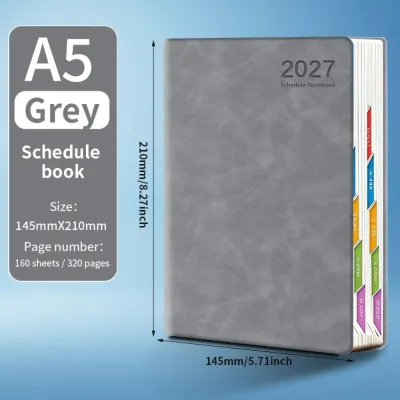
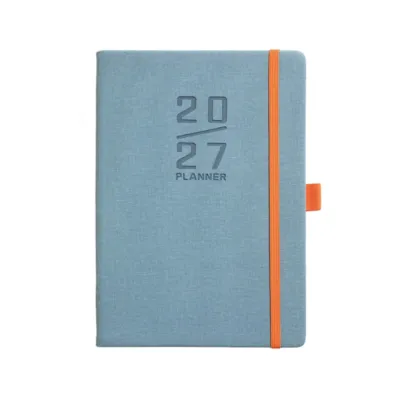
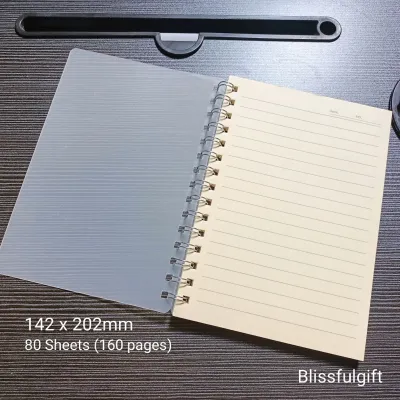
Prices are valid at publication and may change. Please refer to the product page for the latest price.
Many modern planners act as companions to digital calendars. If you use a digital calendar for real-time scheduling and alerts, your physical monthly planner does not need to capture every hourly appointment. Instead, it can serve as a high-level dashboard for major milestones, travel dates, and project deadlines. In this scenario, a layout with a smaller grid but larger margins for notes and action items is highly effective.
Portability also dictates your layout and binding choices. A large desk-bound planner offers spacious writing blocks but is heavy to carry around in a daily commute. Conversely, a pocket-sized or slim A5 planner fits easily into a bag but limits the amount of detail you can write in each daily square.
How to Evaluate Paper Quality for Different Pens
Paper quality is not determined by thickness alone, but rather by how the paper fibers interact with your writing instruments. When reviewing planner specifications, look for the paper weight measured in grams per square meter (GSM). Standard planner paper typically ranges from 70 GSM to 120 GSM, with higher numbers generally offering better resistance to ink bleed-through.

If you write with fountain pens or wet gel pens, you must look beyond GSM to the paper’s coating and formulation. Coated papers, often favored by premium Japanese stationery brands, allow ink to sit on top of the page, which prevents feathering and preserves vibrant ink colors. However, this coating significantly extends drying times, which can lead to smudging if you close the planner too quickly in humid climates.
For ballpoint pens or quick-dry gel pens, uncoated or slightly textured paper is often more practical. This “toothy” paper absorbs ink rapidly, allowing you to write quickly and turn pages immediately without smearing. To verify compatibility before committing to a full year, always perform a pen test on the back notes pages of a new planner, checking for feathering, ghosting (show-through), and complete bleed-through.
The color of the paper also plays a significant role in your daily planning experience. Bright white paper offers high contrast, making ink colors pop, but it can cause eye strain under bright office lights. Cream or off-white paper is gentler on the eyes and often pairs beautifully with dark or sepia inks, though it may slightly alter the appearance of pastel highlighters or light-colored gel pens.
Comparing Common Monthly Layout Structures
The classic monthly grid remains the standard for visual day-mapping, allowing you to see the entire month’s commitments at a single glance. However, some planners offer linear list formats, where days are stacked vertically or horizontally. Linear lists are excellent for tracking single daily metrics, such as habits, steps, or daily revenue, but they make it harder to visualize overlapping multi-day events.
Pay close attention to how different brands handle weekends and holidays. Some compact layouts compress Saturday and Sunday into a single shared block to save space, which can be frustrating if your weekends are your busiest planning periods. Additionally, check whether the planner pre-prints regional public holidays, as international brands may omit local Singapore holidays or include foreign ones that clutter your grid.
Another critical layout variation is the start day of the week. Planners typically feature either a Sunday-start or a Monday-start grid. Sunday-start layouts align with traditional calendars, which many find intuitive for quick date checking. However, Monday-start layouts group the weekend days together at the end of the row, which is highly beneficial for those who plan their weekends as a single, continuous block of personal time.
Another design detail to compare is how the layout handles overlapping dates at the start and end of the month. High-quality layouts preserve complete daily blocks for every day of the month, whereas some designs split the final squares diagonally (e.g., 23/30), severely limiting your writing space on those days. Look for layouts that use a consistent grid or carry overlapping days into a dedicated notes column.
Decision Framework: Matching Planners to Your Workflow
To simplify your search for the perfect 2027 planner, you can match your writing habits and scheduling needs to one of these common profiles:
- The Fountain Pen Enthusiast: Choose a planner featuring premium, coated paper (such as Japanese-engineered paper) and a lay-flat thread binding. This setup ensures your ink does not feather or bleed, though you may need to use blotting paper in humid environments.
- The On-the-Go Note Taker: Opt for a lightweight, uncoated paper planner (around 80 GSM) with a flexible cover. This allows you to use standard ballpoint or quick-dry gel pens and write rapidly without worrying about smudging.
- The Visual Project Manager: Select a wide, two-page monthly grid layout with a generous sidebar for monthly goals and task lists. This structure helps you map out deadlines and see your entire month's workload at a glance.
- The Minimalist Tracker: Look for a slim, single-page monthly calendar or a linear list format. This keeps the planner incredibly thin and portable, serving as a quick reference tool rather than a detailed daily journal.
What to Verify Before Buying a 2027 Planner
Before finalizing your purchase online or in-store, verify the exact calendar span of the planner. While standard planners run from January to December 2027, academic or mid-year versions may start in July, and some multi-year options include up to 16 months. Ensure the start date aligns with when you actually plan to transition into your new system.
The binding style is critical for usability, especially for monthly spreads that span two pages. Thread-sewn or lay-flat bindings allow the planner to open completely flat on your desk, preventing your hand from bumping against the spine while writing near the center margin. Spiral or wire-bound planners also lay flat and allow you to fold the book back on itself, though the metal coils can sometimes get in the way of your hand.
If environmental impact is a priority, check the manufacturer’s specifications for paper origin and certifications, such as FSC (Forest Stewardship Council) certification. Finally, review the physical dimensions carefully; standard sizes like A5 (148mm x 210mm) or B6 (125mm x 176mm) offer a reliable balance of writing space and portability, making it easy to find protective covers or carrying pouches.
Frequently Asked Questions (FAQ)
Can I use highlighters and markers in standard monthly planners?
Standard planner paper (typically 70 to 80 GSM) can handle mild, water-based highlighters if applied with a light hand. However, alcohol-based markers or heavy ink applications will almost certainly bleed through to the other side of the page. If you love color-coding, look for planners with paper weights of 100 GSM or higher, or stick to dry highlighters and mild-liner pens, always testing them on an inconspicuous page first.
Is a two-page monthly spread always better than a single-page layout?
A two-page monthly spread is generally superior for detailed planning because it maximizes the physical size of each daily block, giving you room to write multiple appointments. A single-page layout is highly compact and saves space, making it ideal for pocket planners or as a secondary reference calendar, but it rarely offers enough space for comprehensive daily task logging.
Community discussion
Share your experience or ask a question. Comments are reviewed before publication.